Fundamentals & Methods
Understanding the fundamentals of electronics cleaning is essential for selecting the right cleaning chemistry, controlling residues, validating cleaning processes, and maintaining long-term product reliability. From removing flux residues on printed circuit boards to controlling ionic contamination in high-reliability electronics, each cleaning application requires a combination of chemistry, process control, materials knowledge, and analytical testing.
ZESTRON’s Fundamentals & Methods provides a technical foundation for understanding electronics cleaning, residue removal, process validation, and emerging cleaning requirements across electronics manufacturing, semiconductor, advanced packaging, automotive, aerospace and defense, medical, and other high-reliability industries.
Explore the 5 core areas below to understand what needs to be cleaned, why it matters, how cleaning processes work, how cleanliness is measured, and how cleaning processes can be optimized for production.
1. Electronics Cleaning Chemistry Guide
Electronics cleaning chemistry is formulated to remove contaminants from electronic assemblies, components, substrates, and manufacturing equipment without damaging sensitive materials. Selecting a chemistry requires more than simply identifying the contaminant.
2. No-Clean Flux Removal & Residue Control
Does no-clean flux need to be removed? Not necessarily. No-clean fluxes are designed so that residues can remain after soldering when the manufacturing process and reliability requirements allow it. However, no-clean does not automatically mean residue-free or reliability-neutral.
3. Guide to Ionic Contamination in Electronics
Ionic contamination consists of electrically conductive ionic species that can remain on electronic assemblies after manufacturing processes. Common sources include flux residues, processing chemicals, handling, plating processes, and other manufacturing operations.
4. Cleaning Validation & Process Optimization
What is cleaning validation? Cleaning validation is the process of demonstrating that a cleaning process consistently achieves the required level of cleanliness without negatively affecting the product, materials, or manufacturing process.
5. Industry-Specific Electronics Cleaning Standards
Electronics cleaning requirements vary significantly by industry and application. A process used for consumer electronics may have very different requirements from one used for automotive, aerospace, medical, semiconductor, or high-voltage applications.
6. Advanced Technologies & New Markets
As electronics become smaller, more complex, and more electrically demanding, traditional cleanliness measurements may not fully describe every potential reliability risk. Cleaning processes need to evolve alongside manufacturing technologies.
How Electronics Cleaning Fundamentals Connect
The six areas above are interconnected. Cleaning chemistry influences residue removal. Residue removal affects surface cleanliness. Cleanliness can influence reliability. Reliability requirements determine validation needs, while industry and emerging technology requirements can change how cleanliness must be measured and controlled.
A typical electronics cleaning development process can therefore follow this progression:
Identify the contamination → Understand the reliability risk → Select the cleaning chemistry → Develop the cleaning process → Verify cleanliness → Validate the process → Monitor production
This approach helps manufacturers move from simply cleaning a product to developing a controlled cleaning process that supports long-term product reliability.
From Cleaning Fundamentals to Production Reliability
E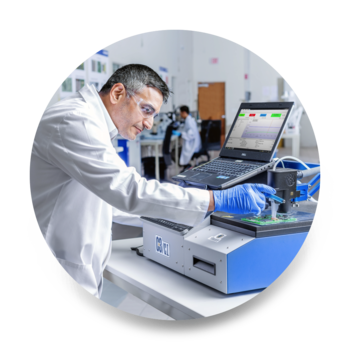 ffective cleaning is not a single step. It is a process that connects chemistry, equipment, materials, contamination, analytical testing, manufacturing requirements, and product reliability.
ZESTRON supports electronics manufacturers throughout this process with cleaning chemistry, process development, analytical services, equipment expertise, and technical consulting.
Whether you are investigating a difficult residue, qualifying a new cleaning process, validating production cleanliness, or developing an advanced electronics application, understanding the fundamentals provides the foundation for making informed process decisions.
Explore ZESTRON's technical resources and discover the cleaning methods, chemistry, testing, and process solutions relevant to your application.
Get educatedStay in the know! Visit the Whitepaper Collection Page for the latest papers.
Looking to Learn More?
Browse technical articles, case studies, and webinars.
Start Here