Mastering Precision Cleaning: Validation & Optimization Explained
Precision cleaning ensures contamination levels meet exacting specifications for electronics, semiconductors, medical devices, and aerospace. ZESTRON, with over 30 years of experience, 9 technical centers, and more than 3,000 installed cleaning processes, helps manufacturers reduce defects, increase yield, and meet regulatory expectations through validated chemistry and process know-how.
Key takeaways
-
Cleaning validation proves a cleaning process removes specified residues to defined limits.
-
Optimization reduces cycle time, solvent use, and cost while preserving reliability.
-
Digital tools and risk-based methods accelerate validation and improve traceability.
-
ZESTRON provides chemistry, analytics, and technical support suited to high-reliability production.

Understanding Precision Cleaning
Precision cleaning removes residues at micro and nano scales that affect functionality, reliability, or aesthetic quality. It spans solvent, aqueous, vapor, and mechanical methods and requires controls for time, concentration, temperature, and mechanical action. Precision cleaning is a deterministic process - repeatable parameters yield repeatable cleanliness results.
Define contamination levels
When we define the contamination levels, we could start first of all saying the contamination limits should be based on certain things. These things could be the product reliability requirements, the end use environment, customer specifications, or industry standards like IPC.
And the typical acceptance examples could be the customer specific ionic species limits using the ion chromatography. No visible residue under magnification according to the IPC, passing SIR(surface insulation resistance test) results. Under the temperature and humidity bias testing, no detection of organic, non-ionic contamination through FTIR.
What is Precision Cleaning?
Precision cleaning is targeted removal of process residues such as flux, oils, particulates, ionic contaminants, and particulate debris to meet quantified acceptance criteria. Success depends on validated methods, analytical verification, and consistent controls. In electronics, allowable ionic contamination is measured in micrograms per square centimeter or parts per million and must be proven by data.
 How we select the right chemistry?
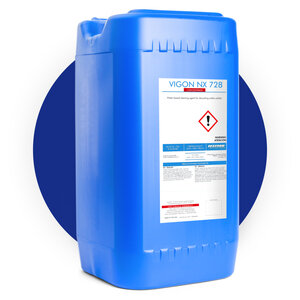
The chemistry selection depends mainly on flux type. What type of flux we are dealing with? Is it water-soluble flux, rosin-based, no clean, whether it's leaded or lead-free. Then it could also depend on the board complexity, like in the component standoff height. And of course, the hardware that's used on the assembly is from the materials compatibility standpoint. Of course, then we should consider the type of the cleaning equipment, whether it's going to be a spray-in-air or spray under immersion, such as ultrasonic and so on. And plus, lastly, the environmental and safety requirements.
Importance in various industries
Precision cleaning prevents failures in electronics, corrosion in aerospace parts, contamination in pharmaceuticals, and adhesive failures in medical devices. Industries with zero-defect tolerance rely on validated cleaning to avoid recalls, warranty costs, and safety risks. For semiconductor fabs and power electronics, even trace residues can cause short circuits, yield loss, or field failures.

your product requirementsCleaning Validation: An Overview
Cleaning validation demonstrates that a cleaning process consistently reduces contaminants to predefined limits. Regulatory agencies increasingly scrutinize cleaning in GMP environments, and standards demand documented evidence. Validation includes design, qualification, testing, and ongoing monitoring. It ties chemistry, equipment, sampling, and analytics into a controlled lifecycle.
Definition of Cleaning Validation
Cleaning validation is documented evidence showing a cleaning procedure can reliably remove specific residues to an acceptable level and prevent cross-contamination. It defines acceptance criteria based on toxicological data, product specifications, or functional requirements. The procedure is data-driven and includes sampling plans, test methods, and pass-fail criteria.
Key Elements of Cleaning Validation
Core elements include:
- Risk assessment and acceptance criteria
- Validated analytical methods for residues
- Representative worst-case product selection
- Documented procedures for cleaning and sampling
- Acceptance criteria tied to toxicity or functionality
These elements combine to create robust, auditable validation packages for regulators and quality teams.
Stages of Cleaning Validation Process
Validation follows a lifecycle: process design, process qualification, and continued verification. Each stage delivers specific outputs - design yields the protocol, qualification demonstrates reproducibility, and continued verification confirms ongoing control. This structure aligns with GMP principles and industry guidance for periodic requalification.
Process Design
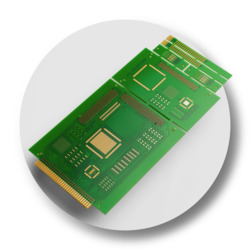
This defines cleaning chemistry, equipment, cycle parameters, and sampling strategy. It includes lab trials and small-scale tests to establish effective detergent, concentration, temperature, and mechanical action. ZESTRON technical centers support design with lab testing, residue identification, and solubility data tailored to assemblies or substrates.
- Define cleaning goals
- Choose chemistry
- Standardize procedures
Process Qualification
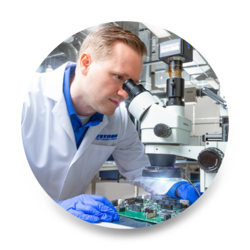
Qualification demonstrates the process works in production. It includes installation qualification (IQ), operational qualification (OQ), and performance qualification (PQ). PQ uses worst-case assemblies, replicates, and acceptance sampling. Data must show consistent removal across runs and operators, with analytical reports and deviation handling.
- Test cleaning effectiveness
- Validate parameters
- Document results
See How We Qualify Your Process
Continued Verification
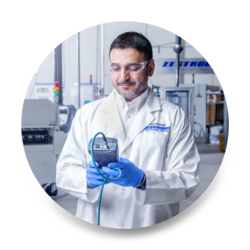
When it comes to continued ongoing verification we monitor routine production using periodic sampling, trending, and corrective actions for drift. Digital tools accelerate monitoring by storing data, enabling alerts, and simplifying requalification when changes occur. Continued verification ensures long-term control and documents stability for audits.
- Monitor production
- Track key indicators
- Maintain records
repeatable cleanlinessDocumentation and Compliance
Validation requires clear protocols, sampling plans, analytical reports, and change control records. Documentation must demonstrate traceability from raw materials to final results, with defined acceptance criteria and signatures. Regulatory scrutiny demands transparent records; poor documentation causes audit findings even when cleaning works.

Process Optimization in Precision Cleaning
Process optimization reduces cycle time, chemical consumption, and variability while maintaining or improving cleanliness. Optimization considers chemistry selection, process parameters, equipment design, and automation opportunities. Effective optimization increases throughput and lowers total cost of ownership without jeopardizing product reliability.
What is Process Optimization?
Process optimization refines parameters to achieve the target cleanliness with minimum resource use. It systematically tests variables - detergent concentration, temperature, agitation, time - and identifies the most efficient combination. Optimization uses design of experiments, root cause analysis, and pilot trials to quantify improvements.
Benefits of Process Optimization
Optimization delivers:
-
reduced cycle time and higher throughput
-
lower solvent and energy consumption
-
consistent cleanliness and fewer reworks
-
improved yield and margins
-
easier compliance and documentation
These benefits translate to measurable ROI and reduced environmental footprint.
Techniques for Effective Process Optimization
Effective optimization combines chemistry selection, equipment tuning, and process control. Use analytical feedback to guide changes and validate improvements. Techniques include solvent substitution, surfactant tuning, temperature profiling, and mechanical enhancements. Real-world tests must confirm that optimized processes meet validated acceptance criteria.
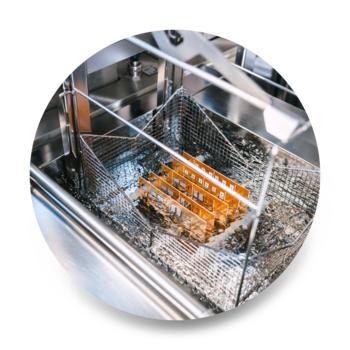
Vapor Degreasing
Vapor degreasing excels at removing oils and organics from complex geometries. It provides solvent recovery and low residue when managed properly. Optimization focuses on exposure time, condensate control, and solvent choice to reduce emissions and cycle time while meeting residue limit
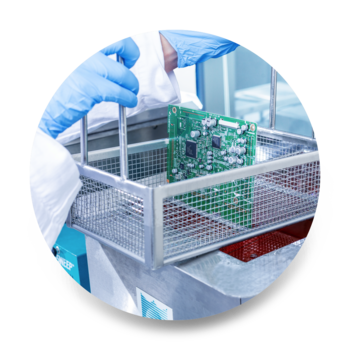
Ultrasonics
Ultrasonic cleaning uses cavitation to dislodge particulates and residues. It is effective for small assemblies and fine features. Optimize frequency, power, temperature, and detergent to balance cleaning efficiency with part integrity. Ultrasonics often pairs with filtered aqueous systems for sustainable operations.
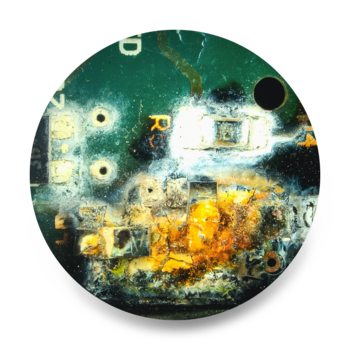
Mechanical Blasting
Mechanical blasting removes stubborn particulate or oxide layers using controlled media. It is a selective method for certain substrates but can be aggressive if not optimized. Control media size, pressure, and nozzle distance to protect surfaces while achieving required cleanliness.
Equipment selection Inline vs Batch Systems
Inline and Batch cleaning systems? Let's first of all differentiate what these are. Inline is similar a car wash, you have the wash, chemical isolation, rinse, and drying, and there's a conveyor belt that moves the board from one module to another module. In the batch system, everything takes place in a one single module. And typically, it resembles an industrial type of dishwashing equipment, made to resist the cleaning agents that are used in these processes.
| Factor | Inline Cleaning System | Batch Cleaning System |
|---|---|---|
| Throughput | Very high (continuous processing) | Moderate to high (depends on batch size) |
| Capital Cost | Higher initial investment | Lower initial investment |
| Operating Cost | Lower cost per assembly at volume | Higher cost per assembly at volume |
| Machine Footprint | Large (typically 20–60+ ft long) | Compact (typically 6–15 ft footprint) |
| Energy Consumption | Higher total energy use, lower per board | Lower total energy use, higher per board |
| Automation Level | Fully automated | Semi-automated |
| Process Consistency | Very high | High but operator-dependent |
| Scalability | Excellent for large-scale manufacturing | Limited by batch size and cycle time |
| Ideal Application | Automotive, consumer electronics, high-volume EMS | Aerospace, medical, defense, prototype, high-mix production |
How does the cost vary between an Inline vs a Batch cleaner?
With an Inline cost, there is a higher equipment investment. The machine is going to be using more energy. And it may require more maintenance because you do have various multiple modules in an inline cleaner. With that you get lower labor per board because the operator is not involved. For the batch costs, it’s a lower purchase price, but higher labor cost because of the operator involvement, it will consume less energy and is potentially higher per board cleaning cost. When we are looking at the cost variations between inline cleaner cost versus batch cleaner cost, we have to analyze the chemistry consumption in both types of equipment.
H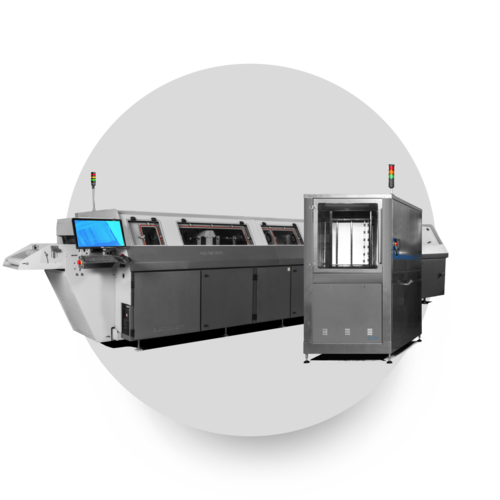 ow much DI water is used, what will be the energy consumption, what will be the maintenance or downtime as well as the yield impact, which will help you to decide between the two type of equipment. What are the throughput considerations? The throughput considerations between the batch systems and the inline systems, could be the production style, the average volume of the boards manufactured in a given day, the flow mechanics, and the line integration. If we start with the production style as part of the throughput metric, the batch systems are suitable for high mix, low volume production, whereas the inline systems are suitable for low mix and high volume productions.
Then we have the average volume. If a board build cost less than 200 boards per day, then you might be able to survive by getting a batch cleaner. But if you're building more than 200 up to 1000 boards a day, the inline cleaning systems will be much more appropriate for you. A batch cleaner cleans a batch at a time regarding flow mechanics so it's intermittent. You're going to hit the button, walk away, come back 45 minutes later, unload and load the new fresh batch of boards inside and restart the equipment again.
Whereas the inline is more of a continuous process. It never stops. It stops, of course, as the boards exist, the modules, but all you need to do is place the board on the conveyor belt. With the line integration, batch cleaners can only be used offline, so it requires manual loading and unloading. Whereas the inline, since it does have a moving conveyor belt, it can be tied directly to another separate SMT line conveyor.
Digitalization and Automation in Optimization
Digital tools accelerate validation and optimization by capturing process parameters, sampling data, and analytics. Fully digitalized validation reduces paperwork, shortens approval cycles, and increases auditability. Automation ensures consistency by enforcing recipes and capturing deviations, helping teams scale validated processes reliably.
Challenges in Cleaning Validation and Optimization
Common challenges include incomplete residue identification, poor sampling strategy, inadequate analytical sensitivity, and documentation gaps. Changes in materials, adhesives, or board finishes can invalidate existing processes. Addressing these challenges requires cross-functional collaboration and proactive change control.
 Has ZESTRON dealt with White Residues?
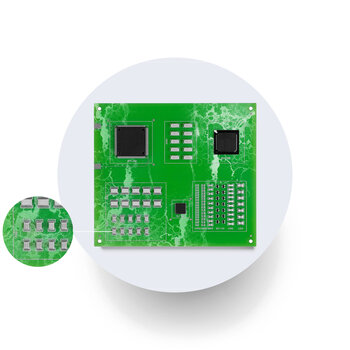
Yes, we have dealt with white residues. Let's start with why does it occur? It could occur due to lack of the cleaning agent performance, or incomplete rinsing. Hot water contamination, mainly due to magnesium and calcium. It could also be a lower chemistry concentration, or there may not be a match between the flux and the cleaning agent in terms of compatibility. Maybe drying is too quick, or the wash bath is completely loaded. Or that it lost its performance to remove the flux residues effectively.
How do we fix these? By adjusting the settings. This could be the wash temperature, exposure time, the concentration of the cleaning agent, or you can also focus on improving the spraying action, if you're using a spray in air machine or ultrasonic, you can improve the rinse quality, increase the exposure time, or lowering or increasing the concentration level if the bath is loaded up then replace the bath and put the fresh cleaning agent solution. You can improve the DI water quality as well to optimize the drying profile.
What is foam buildup?
Foam buildup can happen either in the wash section where your cleaning agent is, or it can happen in the rinse section. The reason for foaming could be related to the excessive spray pressure, or the bucket filling effect. It could be due to a contaminated bed, such as a fully loaded bed. Air entrainment could be one reason. Or a wrong chemistry selection, meaning the chemistry doesn't have a deforming agent in its nature, or it could have a low concentration level of the cleaning itself. So the fix is in some cases, increase the concentration. Use a cleaning agent that has a deforming agent in it. Adjust the spray bar orientation or the nozzle design.
How nozzle design effects cleaning: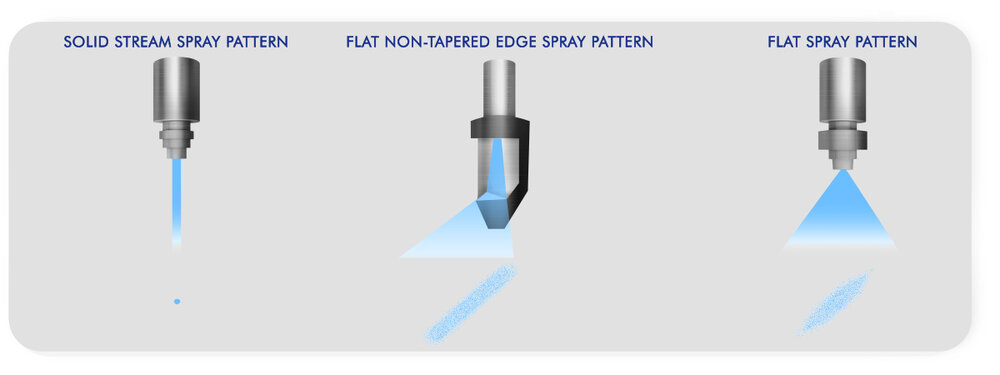
Solid Stream Spray Pattern: These nozzles maintain a cohesive solid stream for a longer distance, minimizing spray breakup and droplet formation after discharge.
Flat Non-Tapered Edge Spray Pattern: The deflector design redirects the spray pattern away from the centerline of the inlet pipe, allowing coverage in a different direction than the fluid flow path.
Flat Spray Pattern: Commonly used in cleaning processes that require consistent spray impact across the full pattern width while avoiding overlap between adjacent spray patterns.
Make sure that you reduce the air intake and check that your pumps are circulating the solution, regardless of whether it's a cleaning agent working solution or a rinse water, it doesn't cavitate. Cavitating pumps may create foam as well. Also improve the bath maintenance. If there is any precipitation, conduct the maintenance step to remove that precipitation on the walls of the wash tank and chamber of the modules.
Common Pitfalls and Mistakes
Frequent mistakes are relying on visual cleanliness, poor worst-case selection, insufficient sampling, and neglecting operator variability. Other pitfalls include ignoring environmental impacts and failing to revalidate after process changes. These errors lead to nonconformances and potential field failures.
What causes poor drying?
The causes for poor drying could be insufficient airflow due to clogged air knives, lower drier temperature, or the assemblies could have a high-density packaging on them then the moisture gets trapped underneath those low standoff components, high dense assemblies. Or there could be excessive rinse carryover. In an inline cleaner, you have a moving belt, it's moving at a very fast pace, then a lot of rinse water is going to be carried out from the rinse section into the drying section, which the drying section of the machine may not be able to keep up.
So how do we fix this issue? Look at the wire settings, the belt speed, or the cycle time for the rinse before you move on to the drying cycle of the process. We can of course also add an offline step, a baking step, using vacuum drying.
Staining could be also defined as discoloration on the board, especially on the components. The causes for staining and discoloration could be related to the flux and metal interaction and could be related to poor rinsing. Excessive wash temperatures are also critical. Improper chemistry can be chemistry without any corrosion inhibition package integrated in it. So, especially if you're using an alkaline cleaning agent, and you don't have a corrosion inhibition package, the alkaline cleaning agents will be too aggressive on the solder joint alloys. It may discolor them, or it may leave a blue tinted color on the joint surface. Oxidation could be one other issue from the staining standpoint or the mineral contamination. They typically look like rainbow discoloration or a brown residues or white haziness. So to fix this you can use an alkaline cleaning agent, but with a built-in corrosion inhibitor. Or you can use pH neutral defluxing agent such as VIGON® N 680, which will be much more milder on the sensitive components or sensitive solder joint alloys.
You can improve the water purity, optimize, or adjust the chemistry concentration. If you're running at an excessive wash temperature, lower that temperature, increase the rinse effectiveness so you don't leave any cleaning agent, residual cleaning agent that can dry on these sensitive alloys or metal surfaces. And it could be also related to the loaded bath, meaning the loaded bath is going to accumulate more and more flux. And flux are acidic in nature, you don't want to leave any acidic contamination on the bore surface and let it dry there.
Addressing Risk-Based Approaches
Risk-based validation prioritizes efforts where failure impacts safety or functionality. Tools such as FMEA help rank components and residues, guiding sampling and acceptance criteria. Regulators accept risk-based approaches when supported by data, logical rationale, and documented controls.
Comparative Analysis of Cleaning Solutions
Select cleaning solutions based on residue type, throughput, materials compatibility, environmental and safety requirements, and total cost of ownership. Use a scorecard to evaluate factors like cleaning efficacy, cycle time, waste handling, and vendor support. The right solution balances performance with sustainability and serviceability.
| Criteria | ZESTRON | Alternatives |
|---|---|---|
| Industry Experience | 30+ years, 9 Global Techincal Centers | Varied, often local |
| Solution range | Chemistry, analytics, services | Chemistry or Equipment only |
| Validation support | Lab testing, protocols, training | Limited or extra cost |
| Installed processes | 3,000+ Globally | Fewer documented instals |
| Sustainability | Solvent reduction, aqueous options | Varies by supplier |
ZESTRON: A Trusted Solution for Precision Cleaning
ZESTRON combines process chemistry, analytical services, and engineering support to validate and optimize cleaning. Their technical centers perform residue identification, method development, and performance testing. Customers benefit from proven chemistries, documented protocols, and on-site support to accelerate validation and improve yield.
Real-World Applications and Case Studies
Validated cleaning processes show measurable improvements in uptime, yield, and field reliability. Examples across industries include reduced ionic contamination on PCBs, improved adhesion in medical devices, and fewer electrical failures in power modules. Data-driven validation converts cleaning from an art into a controlled science.
Success Stories with ZESTRON Products
Customers report fewer reworks and lower failure rates after switching to ZESTRON chemistries and validation services. Typical outcomes include reduced cleaning times by 20 to 50 percent and solvent use cuts of 30 percent or more. ZESTRON’s combined lab and onsite approach shortens time to validated production.
Case Study: Multiple Thermal Cycles
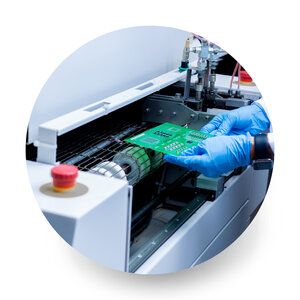
Multiple thermal cycles may be required for a variety of reasons in the production of PCBs. If the PCB includes SMT as well as THT, the PCB will be processed through both a reflow oven and wave solder system. Also, depending upon the complexity of the PCB design, for example the use of stacked components or double-sided circuitry, multiple reflows will be required.
Download The Impact of Multiple Thermal Cycles Case Study
Case Study: Cleanliness Comparison Study
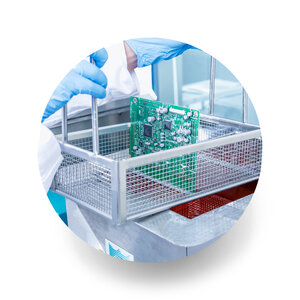
The 2010’s and early 2020’s have seen drastic and dynamic growth and development across the SMT manufacutring industry. Board density has increased and stand-off heights have reduced, challenging the PCB assembly process. PCBs have increased in engineered complexity, enabling processing power and capacity previously only dreamed of.
Download the "Cleanliness Comparison Study" Case Study
Conclusion and Recommendations
Precision cleaning validation and optimization are essential to product reliability and regulatory compliance. Integrate analytical evidence, risk assessment, and continuous monitoring. Optimize for throughput and sustainability without compromising validated acceptance criteria. Vendor partnership and digitalization speed implementation and reduce audit risk.
Final Thoughts on Precision Cleaning
Cleaning is not optional in high-reliability industries - it is a measurable process that must be controlled. Use validated methods, maintain rigorous documentation, and treat cleaning as part of the product lifecycle. Companies that invest in validation and optimization see fewer failures and stronger margins.
Recommendations
- Start with a residue identification and worst-case risk assessment
- Engage vendors like ZESTRON early for chemistry and validation support
- Use DOE and pilot runs to optimize parameters before qualification
- Implement digital recordkeeping to simplify audits and trending
- Schedule periodic requalification after material or process changes
FAQ
Acceptance criteria depend on function and toxicity. Typical metrics include ionic contamination in micrograms per square centimeter and resistivity measurements. Define criteria based on manufacturer requirements, environmental testing, or field performance data. Use toxicological limits if applicable for safety-related residues.
Revalidate after any significant change: new materials, chemistry, equipment, or process parameters. Also revalidate periodically based on risk and trending. Continued process verification with sampling and statistical control reduces unnecessary full revalidations.
Yes. Digital validation platforms capture parameter data, store analytical results, and automate reports, cutting administrative time and improving traceability. Fully digitalized validation shortens approval cycles and minimizes human error, while enabling easier audits in 2026 and beyond.