Essential Electronics Cleaning Standards for Product Reliability
Product reliability begins with cleanliness. Contaminants as small as one micrometer can cause electrical leakage and thermal hotspots that reduce mean time between failures. ZESTRON has supported over three thousand installed cleaning processes globally and provides standards based testing to mitigate those risks. This article explains industry standards, cleaning methods, validation strategies, and risks to help engineers and quality teams improve product reliability.
Key takeaways
-
Cleaning is a reliability control, not a cosmetic step.
-
Standards vary by industry, and medical, automotive, power electronics and general PCB assembly each have specific requirements.
-
Analytical methods define 'clean enough' and guide process control and validation.

Understanding product reliability
Precision Cleaning for a More Reliable Future in Electronics
Product reliability is the probability that an electronic product performs its intended function for a specified period under stated conditions. Manufacturers measure reliability with metrics like MTBF, failure rate per million hours, and field return rates. For high reliability sectors such as medical devices, and aerospace, acceptable failure rates can be below ten failures per million hours, which demands strict contamination control. Cleaning is one of the most cost effective ways to reduce early life failures caused by ionic residues, flux, solder splash, and particulates. Ionic contamination lowers surface insulation resistance and promotes dendritic growth on printed circuit boards, leading to shorts over time. Thermal cycling accelerates failure mechanisms when residues act as hygroscopic salts that trap moisture and conduct current under bias.
Importance of cleaning in ensuring reliability
Cleaning removes process residues and foreign particles that compromise electrical performance and thermal management. Validated cleaning reduces field returns, increases mean time to failure, and enables longer warranty terms. Repeatable cleaning processes improve manufacturing yield and reduce rework costs, a direct benefit to margins and time to market. Companies such as ZESTRON provide process chemistry, analytical services, and validation protocols to align cleaning results with industry standards and reliability targets.
Electronics cleaning standards by industryMedical devices: Guidelines and compliance
Medical device cleaning requirements are among the strictest in electronics manufacturing because patient safety is at stake. Medical manufacturers must satisfy FDA guidance and comply with ISO 13485 and related standards to control cleaning. Residue limits are typically defined by risk assessments, supported by analytical methods such as ionic contamination tests and residue extraction followed by conductivity or chromatography. ZESTRON provides cleaning agents and validation support tailored to meet medical device traceability and documentation requirements.
FDA and ISO 13485 compliance
FDA does not issue a single cleaning standard, but its regulations require manufacturers to control processes and document validation under good manufacturing practice. ISO 13485 requires documented processes, risk based validation, and traceability for cleaning chemicals and procedures. Work with specialty providers like ZESTRON to obtain method development, analytical testing, and protocol templates that satisfy audits.
Best practices for cleaning validation
Cleaning validation for medical devices follows a lifecycle approach: define acceptance criteria, select analytical methods, demonstrate removal efficacy, and monitor production. Typical analytical methods include conductivity after water extraction, ion chromatography, total organic carbon, and surface analysis via microscopy. Validation uses worst case soils, representative materials, and acceptance margins tied to clinical risk, and documentation must support repeatability.
Biocompatibility is the ability of a medical device to function in contact with living tissue without triggering harmful biological responses. In electronics used in wearables, surgical tools, or implants, these centers on whether cleaning residues flux, ionic salts, solvent or saponifier traces, particulates could provoke an adverse reaction once the assembly is inside the body.
There is no single specification that defines “clean enough to be biocompatible.” Manufacturers must integrate IPC electrical cleanliness standards (IPC test method -650 2.3.25, Standard J-STD-001) with ISO 10993, which provides the framework for evaluating biological risk.
ZESTRON supports this by following IPC guidelines to assess contamination type and level: ROSE testing for rapid ionic screening, ion chromatography for identifying specific ionic species, and SIR testing for reliability impacts. Ultimately, each manufacturer establishes its own cleanliness limits based on qualification data.
What is Residue sensitivity?
Residue sensitivity refers to the likelihood that cleaning or process residues such as flux residues, ionic contaminants, solvent or saponifier traces, solder byproducts, or sterilization residues will cause an adverse biological response when a medical electronic device contacts skin or tissue. In biocompatibility terms, this primarily concerns sensitization, where repeated exposure to a chemical residue can trigger an immune-mediated allergic reaction.
Because medical electronics are used in wearables, surgical tools, and implantable devices, manufacturers must ensure that residues remaining after the soldering process are thoroughly removed, and that sterilization byproducts do not exceed levels that could provoke an adverse effect on the body. ZESTRON follows IPC cleanliness evaluation guidelines to help manufacturers understand and control this residue risk.
Residue sensitivity is critical because no single standard defines a universal "biocompatible cleanliness level." Instead, manufacturers must combine IPC electrical cleanliness standards with ISO 10993 biological risk standards to ensure the final device is safe for patients.
How do we deliver the customer documentation?
ZESTRON provides customers with clear, comprehensive technical documentation, including trial reports, technical studies, and analytical test results in a well-organized PDF format. We also offer to schedule a review to walk through the findings, address questions, and ensure the customer has full clarity and confidence in the results.
What are cleaning challenges in the medical industry?
For medical electronics, wearables, surgical tools, and implants, trapped flux residues and ionic contaminants are riskier than in consumer devices, since they can contact skin or tissues directly. Cleanliness must satisfy both IPC electrical standards and ISA 10993 biological safety requirements, and sensitive biocompatible materials limit how aggressive the cleaning chemistry can be.
ZESTRON's matched chemistries remove residue effectively without damaging biocompatible materials.
Electronics cleaning standards by industryPower electronics in automotive and industrial applications
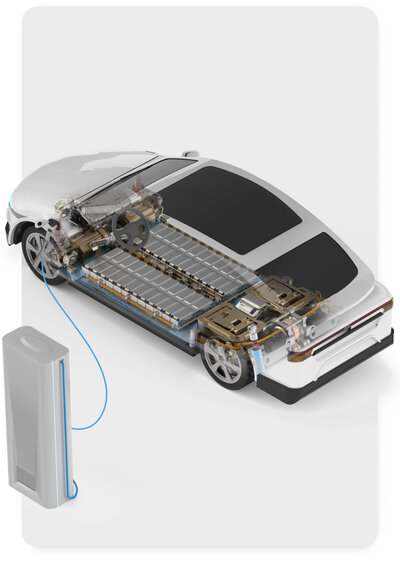
Power electronics in EVs, inverters, and industrial drives face thermal and mechanical stresses that magnify the impact of contaminants. Residues near power bonds or busbars can create localized heating or promote corrosion under high current, causing early failures. ZESTRON recommends process controls, cleanliness acceptance criteria, and pre bonding cleaning to secure long term performance.
Cleaning requirements pre-bonding
Pre-bonding cleaning removes flux residues, oxides, and particulates to ensure quality thermal and electrical contacts during soldering or sintering. Methods include ultrasonic aqueous cleaning, focused spray, and solvent wipe followed by controlled drying and analytical verification.
Performance of aqueous cleaners
Aqueous cleaners have improved significantly, matching solvents for many soils while reducing VOC exposure and user hazards. Key performance factors are surfactant selection, temperature control, rinse quality, and compatibility with coatings and adhesives. ZESTRON aqueous chemistries include rinse aids and corrosion inhibitors tailored for power electronics applications.
What is Temperature cycling?
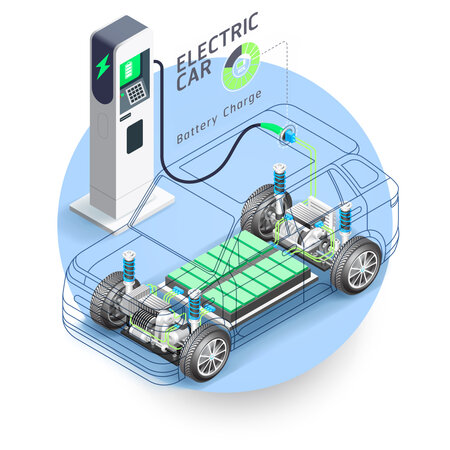
Temperature cycling is a reliability stress test in which a PCB assembly is repeatedly exposed to alternating high and low temperatures to simulate the thermal swings automotive electronics face in the field. The repeated expansion and contraction stresses solder joints, plated vias, and component interfaces, and any residue trapped beneath low-standoff components can worsen this effect by absorbing moisture or accelerating corrosion during cycling. The test is typically specified under standards such as IPC-9701. ZESTRON supports this requirement through cleanliness validation, including ionic contamination testing and SIR testing, that helps ensure assemblies pass thermal cycling qualification.
What is Humidity exposure?
Humidity exposure is a reliability stress test in which a PCB assembly is held at high humidity, commonly 85°C/85% relative humidity, often with electrical bias applied to simulate the moisture automotive electronics encounter in the field. Under these conditions, any ionic residue left on the board absorbs moisture, lowering surface insulation resistance and driving electrochemical migration, corrosion, and leakage current between conductor tracks. It is typically specified under standards such as ISO 16750 and IEC 60068-2-78. ZESTRON supports this requirement through cleanliness validation that helps ensure assemblies pass humidity exposure qualification.
What is Long life expectancy?
Long life expectancy is the automotive requirement that electronics remain reliable for 10-15 +years of field service, far beyond consumer electronics, which are typically only rated for 1-3 years. Automotive-grade components must operate across a wider temperature range (roughly- 40 °C to 150 °C) and tolerate near-zero failure rates, since a failed part can mean a safety issue rather than just an inconvenience. Residues left on the board matters here because its damage is cumulative rather than immediate: ionic contamination does not necessarily cause failure on day one, but over years of thermal cycling and humidity exposure it slowly drives corrosion, electrochemical migration, and dendritic growth that eventually degrade insulation resistance or short adjacent conductors. This is why long-life qualification is closely tied to manufacturing standards IPC 6012 class3 ( and its automotive addendum, IPC-6012 DA) and quality systems like IATF 16949. ZESTRON’s cleanliness validation supports this by helping ensure residues is controlled at the outset, reducing the chance that a slow building contamination issue surfaces years into a vehicle’s service life.
What are cleaning challenges in the automotive industry?
Ionic residue from soldering can form conductive paths under bias, causing corrosion and short circuits, especially in high-voltage systems. Low-standoff components and high-density assemblies trap flux and residue underneath, where cleaning fluid can't easily reach. Fast production throughput often limits cleaning time, increasing residue carry-over. Over time, residue lowers insulation resistance and can cause delamination under thermal stress. High-power EV modules add further risk, as flux and oxide residue can weaken wire-bond and mold adhesion.
ZESTRON addresses these challenges with cleaning chemistries formulated for power electronics and high-density, low-standoff assemblies, paired with analytical validation (ion chromatography, SIR testing per J-STD-001) to confirm residue is controlled to reliability-critical levels before boards go into service.
Electronics cleaning standards by industryGeneral PCB assembly and IPC standards
PCB assembly standards from IPC set expectations for material cleanliness, flux classification, and process monitoring. Compliance with J-STD-001, IPC-A-610, and IPC cleaning guidance supports consistent assembly quality and reliability.
J-STD-001 & cleaning process monitoring
J-STD-001 sets soldering and process cleanliness requirements for electronic assemblies and notes when cleaning is required after flux application. Cleaning process monitoring uses inline conductivity, particle counters, and periodic analytical checks to ensure residues remain below acceptance thresholds. Automated controls and statistical process control reduce variability and document conformance for audits.
Test standards: CH-65 & TM-650
IPC CH-65 and ASTM TM-650 provide test methods and reference procedures for cleanliness evaluation, ionic contamination, and residue identification. These references help production labs implement consistent extraction protocols and reporting formats for cross facility benchmarking.

The cleaning process: Best practices and techniquesDetermining 'clean enough': Visual and analytical methods
Defining 'clean enough' is a risk based decision that balances function, environment, and downstream processes. Simple visual inspections catch gross debris but fail to detect ionic residues and thin films that cause latent failures. Analytical tools include solvent or water extraction followed by conductivity, ion chromatography, TOC, surface insulation resistance, and XPS for surface chemistry. A pragmatic production strategy uses a tiered approach: visual inspection, spot testing, and lab analytics for periodic validation. Process capability metrics such as Cp and Cpk for cleanliness measurements support continuous improvement and control.
 Maintenance and tool cleaning practices
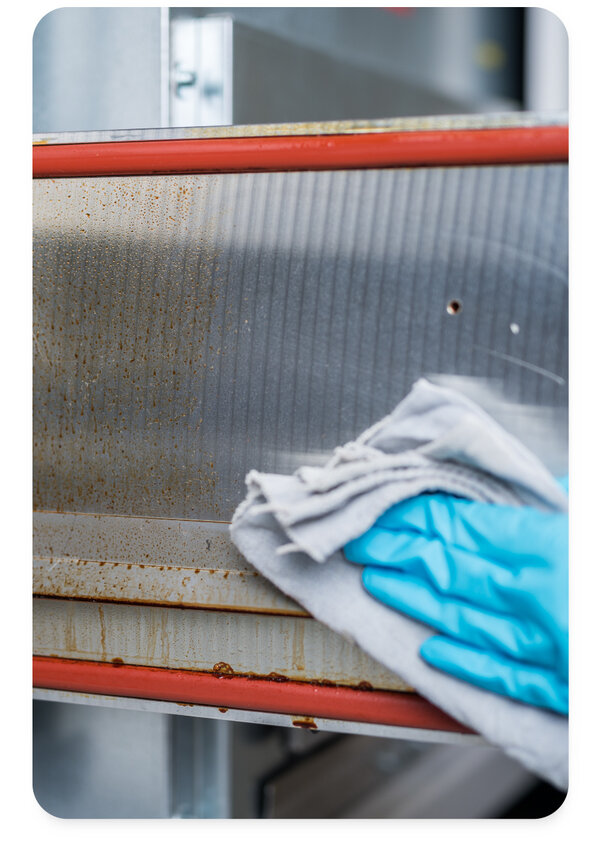
Manufacturing tools accumulate flux, solder, and particulate over time, degrading yields and introducing contamination. Scheduled maintenance, cleaning kits, and supplier specified procedures prevent cross contamination between product lots. ZESTRON technical centers provide on site audits and training to establish tool cleaning frequencies matched to process demands.
User safety and efficient cleaning methods
Safe cleaning reduces operator exposure to hazardous solvents and minimizes slip and fire risks. Use compatible PPE, local exhaust ventilation, and closed cleaning systems where possible to limit exposure and waste.
Use of water based cleaning agents
Water based chemistries reduce VOC emissions and often perform well on polar soils like flux residues. Key parameters are solution conductivity, pH, temperature, and rinse quality to avoid redeposition of contaminants. ZESTRON offers aqueous formulations with corrosion inhibitors and biodegradability data to ease environmental compliance.
What are the Aerospace & Defense Requirements ZESTRON follows?
What is Harsh environment exposure? How does our chemistry protect against this?
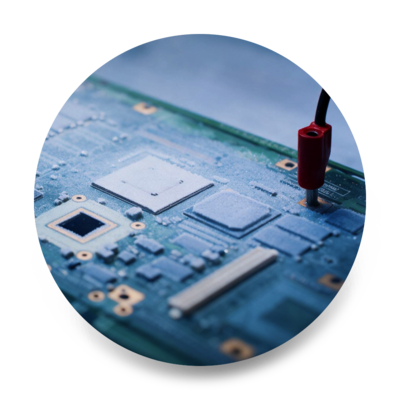
This refers to the extreme conditions aerospace and defense electronics must survive: temperature cycling from roughly -55°C to over 125°C, altitude-driven pressure changes and condensation that draw moisture into sealed assemblies, vibration exceeding 20g RMS that can mobilize loose particles, and for space applications, vacuum outgassing and radiation exposure.
ZESTRON’s chemistry doesn't withstand these conditions directly; it removes the flux, ionic, and particulate residue that would otherwise react with them. Without that residue, moisture from condensation can't drive electrochemical migration or dendrite growth between conductors, and vibration is less likely to dislodge trapped contaminants into sensitive areas. Cleaning also creates a reproducible, contamination-free surface that protective coatings adhere to properly.
- Extreme Conditions
- Residue Removal
- Reliable Protection
What are the Strict validation protocols?
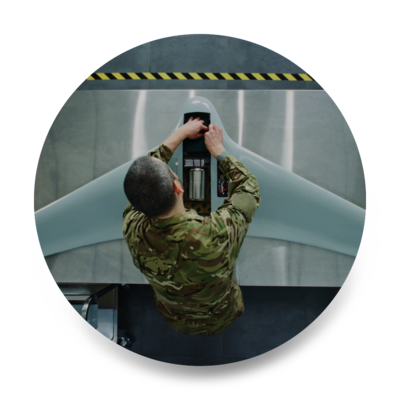
These are the qualification and testing steps required before a mission critical assembly can be released, typically under IPC Class 3. Reflow profiles are validated with thermocouple data for each board design, and 3D solder paste inspection checks every print cycle. Operators must hold current J-STD-001 certification, and inspectors must be IPC-A-160 certified to class3 criteria. Every board goes through 100% automated optical inspection (AOI), X-ray inspection for BGAs and hidden joints, and electrical testing, with full traceability (equipment calibration, first article inspection reports) documented before release.
On cleanliness specifically, at our ZESTRON Technical Center in Manassas, VA, we validate residue levels through Rose testing, ion chromatography, and SEM/EDX analysis, confirmed against current standards like IPC-A-610J, which has updated cleanliness criteria to reflect modern no-clean flux chemistries rather than legacy limits.
- Rigorous Testing
- Certified Inspection
- Full Traceability
Risks of inadequate cleaning in electronics
Impact of contaminants on product reliability
Contaminants cause failure modes such as electrochemical migration, corrosion, dielectric breakdown, and impaired thermal conduction. Ionic residues increase leakage currents and reduce insulation resistance, especially under humidity and bias. Particulates lead to solder bridging and uneven heat distribution while organic soils can decompose under thermal stress, leaving conductive films. Preventing these failure modes through controlled cleaning increases field reliability and reduces costly recalls and warranty claims.
What are the Power Electronics & High Voltage Requirements ZESTRON follows?
How do we deal with Leakage current risks?
ZESTRON tackles leakage current risk by controlling the ionic residue (flux, dust, moisture) that forms conductive films between conductors, a key trigger for partial discharge, and tracking failures at high voltage. This is validated through ROSE and ion chromatography testing to keep contamination below critical thresholds.
In one high-voltage case, the real risk wasn't the particles themselves but how they interacted with the protective coating under humidity and voltage stress. Instead of adding cleaning steps, ZESTRON optimized the coating's flash-off and drying process to improve insulation performance, showing the fix isn't always more cleaning, but tuning cleaning and coating together for actual field conditions.
 What are Surface insulation concerns customers have?
In power electronics and high-voltage assemblies, surface insulation resistance matters more because strong electric fields speed up contamination-driven failures. Ionic residue combined with moisture forms a conductive path faster under high voltage, increasing leakage current and the risk of dendrite growth or CAF growth between conductors, which can lead to shorts, corona, or tracking failures. That's why high-voltage designs need tighter cleanliness standards, wider conductor spacing, CAF-resistant materials, and SIR-validated cleaning before coating.
What are some best practices in this industry?
Best practices for power electronics and high voltage assemblies include: matching cleaning chemistry to the flux used and validating with ROSE, ion chromatography, and SIR testing under humidity/ bias conditions; maintaining proper creepage and clearance spacing based on voltage class; using CAF-resistance laminate materials; fully removing ionic residues before applying conformal coating since coating over contamination traps the risk rather than solving it; and controlling moisture through baking or dry storage prior to coating. Together, these reduce the leakage current, electrochemical migration, and CAF risks that are amplified under high voltage.
What are any new trends your seeing in the industry that might have concerns for customers?
The tightening VOC regulations are pushing the industry away from solvent-based cleaning toward aqueous chemistry. Manufacturers still on solvent-based lines may need to requalify their cleaning process to confirm cleanliness hold after switching. Miniaturization and higher component density mean trace, submicron contamination now causes defects that older tolerances would have tolerated, pushing manufacturers toward tighter, multistage cleaning validation. The shift to 800 EV architecture and silicon carbide power semiconductors raises the bar for manufacturers building high-voltage assemblies, since contamination levels tolerable at 400V may not hold at 800V, requiring tighter ionic cleanliness limits and creepage/clearance margins.
Conclusion
Consistent cleaning standards are essential to product reliability across medical, automotive, power electronics, and general PCB assembly industries. Standards such as ISO 13485, J-STD-001, CH-65, and TM-650 provide frameworks, but each program must be translated into practical validation and control steps. Partnering with experienced suppliers like ZESTRON accelerates method development, provides analytical rigor, and lowers the risk of field failures. Implement tiered monitoring, document cleaning lifecycles, and integrate maintenance to make cleaning a durable reliability control.
FAQ
Verify cleanliness with a tiered strategy starting with visual inspection and magnification to detect gross issues. Follow with quick on line tests such as conductivity of rinse water, surface insulation resistance, or particle counters for airborne debris. Laboratory analytics including ion chromatography, TOC, and surface analysis provide quantitative acceptance data for validations. Document results and link them to process capability to maintain continuous control. Use representative worst case soils and substrates during validation to ensure robustness.
Medical device standards prioritize patient safety and require traceability, risk based acceptance, and documented cleaning validation. Automotive standards emphasize durability under vibration, temperature extremes, and long term exposure; they often set functional acceptance rather than low level ionic limits. Both industries reference IPC and test methods but medical manufacturers must also demonstrate regulatory compliance with FDA and notified bodies. A supplier like ZESTRON helps adapt laboratory test results to the specific acceptance criteria required by each industry.
Aqueous cleaning is preferred when soils are polar, substrates tolerate water, and environmental or occupational safety favors low VOC processes. It excels at removing rosin fluxes, salts, and many ionic contaminants when formulated with appropriate surfactants and rinse aids. Choose solvents for nonpolar soils, thin films, or when substrates are hydrophobic, but consider controlled solvent handling, recovery, and hazard mitigation. Work with ZESTRON to evaluate soils, compatibility, and lifecycle impacts during process selection.