VIGON RC 303 is the best for Cleaning Flux in Reflow Ovens
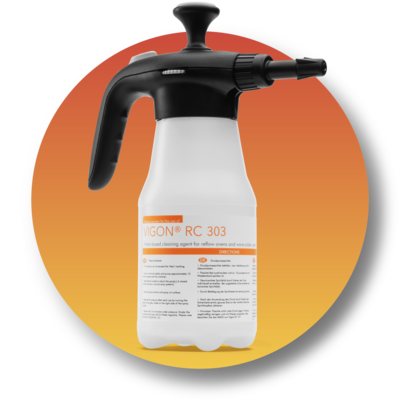
VIGON® RC 303 from ZESTRON is a top specialized product for cleaning baked on flux in reflow ovens. It targets charred residue that standard alcohol cannot remove efficiently, and uses the oven heat to boost performance. RC 303 is a thermal activated cleaner made for reflow ovens, andmaintenace cleaning, and our technical data shows significant time savings versus alcohol based methods. In high volume production, a single oven clean can cost hours of downtime, so choosing an efficient chemistry is essential.
Key takeaways
-
VIGON® RC 303 is designed to attack charred, baked on flux using residual oven heat to increase solvency.
-
It cuts cleaning times significantly compared to alcohol and reduces downtime in automated lines.
-
ZESTRON supports RC 303 with data, training, and analytical services to ensure consistent results.
Steps for effective cleaning with VIGON RC 303
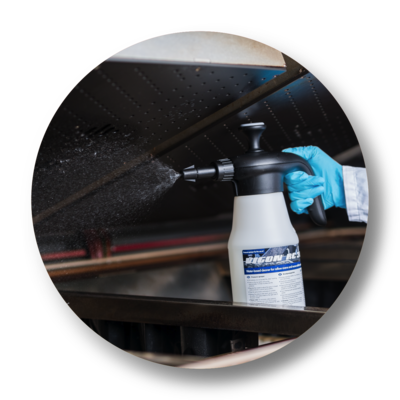
Plan cleaning after a production run while the oven is still warm but below boiling point for the cleaner. Apply VIGON RC 303 with low pressure spray to coat contaminated areas, allowing thermal activation to soften char. Use brushes only if necessary, and collect runoff for neutralization or proper waste handling per ZESTRON guidance. Rinse or wipe residuals when recommended, then inspect with magnification and solvent checks to confirm removal and ionic cleanliness if required. Document the cycle time, temperatures, and product lot to create a repeatable recipe for cleans.
Understanding flux residue in reflow ovens
What is flux and why is it used?
Flux is a chemistry applied to component leads and PCB pads to remove oxides and enable reliable solder wetting during reflow. Common formulations include rosin based, no clean, and water soluble chemistries, each with different residues and thermal degradation profiles. During reflow, flux activates, flows, and then many residues carbonize or polymerize when exposed to peak temperatures above 200° Celsius. This transforms soft residues into hardened, charred films that bond to conveyor rails, fixtures, and oven interior surfaces. Left unchecked, baked on flux reduces heat transfer efficiency, increases particle generation, and can lead to solder defects or unexpected rejects over time.
The challenges of removing baked on flux
Baked on flux forms cross linked polymers and carbonaceous layers that resist simple solvent exposure. Alcohol based cleaners are effective on fresh residues, but they lack the solvency and reaction pathways to break high temperature degradation products. Mechanical scrubbing is labor intensive and can damage delicate conveyor components, so chemistry that softens char is preferable. Ovens operate at elevated temperatures, so an ideal cleaner will use residual heat to accelerate reactions and reduce contact time. Regulatory compliance, worker safety, and material compatibility add further constraints, requiring formulation expertise and technical support. Testing confirms residues are removed fully.
 Introducing VIGON RC 303
Chemical composition and targeted cleaning
VIGON® RC 303 is a proprietary blend that combines solvency agents, surfactants, and stabilizers formulated to dissolve and lift carbonized flux materials. The formulation targets aromatic and char residues through solvating action and controlled chemical reactions rather than simple dilution. VIGON® RC 303 contains corrosion inhibitors and neutralizers to protect oven metals while maintaining aggressive cleaning where flux is bonded strongly to surfaces. ZESTRON provides material compatibility lists that specify which conveyor coatings, gasketing materials, and paints are compatible, helping avoid unexpected damage. Lab testing shows RC 303 lowers ionic contamination and particulate counts versus alcohol. This balance of strength and protection is why implanting RC 303 is standard practice in many high reliability lines today.
Thermal activation: maximizing cleaning efficiency
RC 303 is engineered to react more aggressively when the substrate temperature is elevated, using residual oven heat as a catalyst. In practice technicians apply RC 303 while the oven is cooling after a run, so temperatures between 30-40°C/86-104°F speed solvency without boiling or excessive evaporation. Thermal activation improves penetration into micro crevices and promotes chemical reactions that convert char to soluble fragments. Field data from ZESTRON technical centers indicate cleaning cycles drop by 30 to 70 percent, depending on deposit severity and operator technique. That translates to less downtime and lower labor cost per clean, improving overall equipment effectiveness in production environments. Thermal activation reduces solvent use and waste volumes.
 Fast-acting formula vs. conventional methods
Compared to alcohol wipes or soak operations, VIGON RC 303 is designed to act quickly on thermally degraded residues, shortening the cycle and improving throughput. A single technician can clean a medium sized oven twice as fast using RC 303 with thermal activation compared to repeated alcohol applications. Conventional methods increase consumable costs and generate higher solvent waste, which impacts both operating expenses and environmental compliance. RC 303 often removes deposits that required mechanical scraping, reducing the risk of surface damage and the need for spare parts. ZESTRON documentation includes comparative cleaning times and cost of ownership analyses so production managers can quantify savings before adoption. Operators report faster returns and fewer rejects overall.
Benefits of using VIGON RC 303
Reduced cleaning times and higher efficiency
Thermal activation and strong solvency mean RC 303 dissolves charred flux faster than alcohol, reducing manual labor. ZESTRON published examples show cleaning cycles can drop from two hours to as little as thirty minutes for certain ovens and deposit profiles. Faster cleaning increases oven uptime, supports higher line rates, and lowers per unit cleaning cost across shifts. In automated lines where scheduled maintenance windows are tight, these gains improve overall equipment effectiveness and delivery performance. Savings compound annually when considering labor, solvent purchase, and waste disposal costs, and reduced rework rates significantly.
Compatibility with materials in reflow ovens
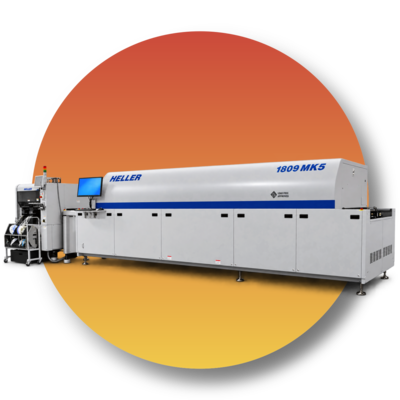
RC 303 was developed with metal and polymer compatibility in mind, minimizing the risk of etching or softening common oven components. ZESTRON supplies compatibility matrices that list conveyor coatings, insulation materials, and gaskets tested against RC 303, with recommended exposure times. For critical assets ZESTRON offers technical services and on site testing to verify compatibility under actual process conditions. Operators should follow concentration and contact time guidelines, and rinse or neutralize when recommended to maintain component life. Using ZESTRON data reduces risk and supports predictable maintenance scheduling across multiple oven models globally.
Operational safety features
VIGON® RC 303 is formulated with worker safety in mind, featuring lower vapor pressures than many solvent blends and integrated corrosion inhibitors. ZESTRON provides safety data sheets, recommended personal protective equipment, and ventilation guidance to ensure compliance with local regulations. Neutralization and waste handling procedures are part of the product documentation, and ZESTRON can advise on disposal or recycling pathways. In many plants VIGON® RC 303 reduces total solvent volume used, lowering flammability risk and waste treatment burdens. Training and documented cleaning procedures from ZESTRON help standardize safe handling and ensure consistent application across operators and shifts.
Three Steps to a Clean SystemHow to Manually Clean Reflow and Soldering Ovens
The manual cleaning method described here is suitable for reflow ovens, wave soldering systems, sintering presses, and drying ovens for sintering pastes.

Step 1.
Spray the cleaning solution onto cold or lukewarm surfaces and let it sit for about 3–5 minutes.

Step 2.
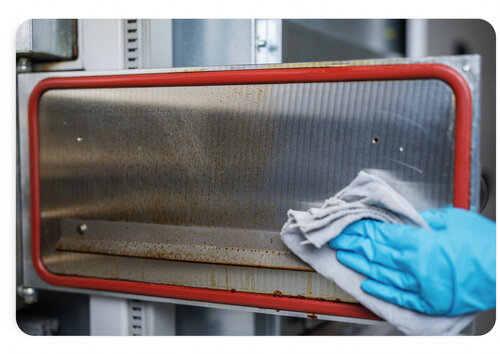
Wipe away the dissolved residue with a lint-free paper towel or cloth.

Step 3.
Let the cleaned surfaces air dry.
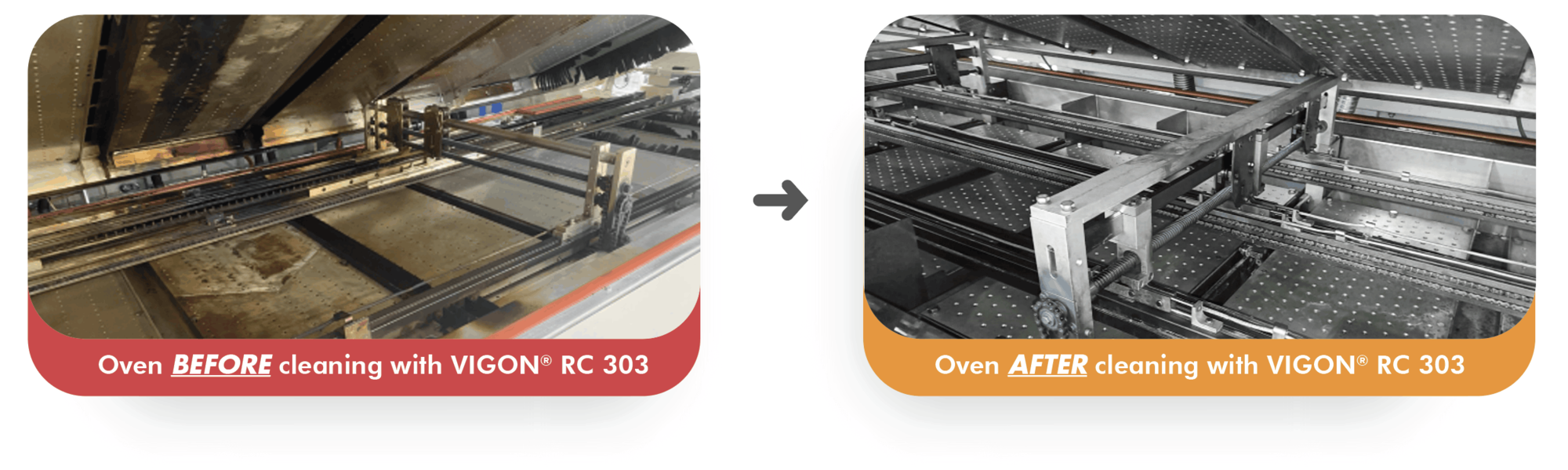
The before-and-after comparison shows,
just how significantly deposits in a SMT rework oven
can be reduced through targeted manual cleaning.
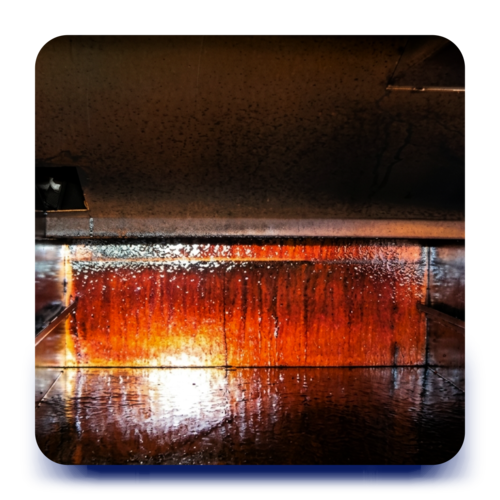
Before cleaning with VIGON RC 303
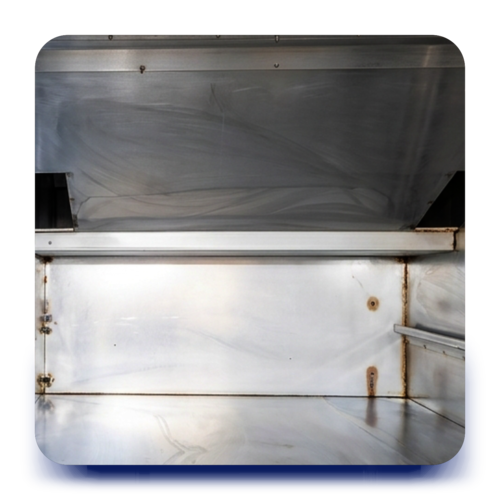
After cleaning with VIGON RC 303

For processes requiring high reliabilityIndustry trends supporting the use of RC 303
Industry moves toward higher temperature lead free profiles and tighter cleanliness targets increase the incidence of baked on residues. Manufacturers adopt specialized chemistries and validated processes to achieve repeatable cleaning outcomes and pass ionic and particle specifications. Regulators and OEM customers increasingly expect documented cleaning recipes and analytics, and ZESTRON delivers both through technical centers and online resources. Lifecycle cost analysis that includes downtime, consumables, and rework often favors specialized cleaners like RC 303 over generic solvents. For processes requiring high reliability, vendors with global technical support and validated procedures, such as ZESTRON, are preferred partners. Trend accelerates adoption in 2026 globally.
Conclusion: VIGON® RC 303 as a trusted solution
VIGON RC 303 from ZESTRON is a specialized cleaner built for the specific problem of baked on flux in reflow ovens. It uses targeted chemistry and thermal activation to break char and polymerized residues that alcohol based solvents cannot remove efficiently. In production environments RC 303 reduces cleaning time, lowers solvent consumption, and minimizes manual scraping and repair work. ZESTRON supports adoption with technical centers, compatibility data, training, and analytics to validate performance and maintain compliance. For teams facing stubborn baked on deposits, switching to a thermal activated, fast acting chemistry like RC 303 is the pragmatic choice to restore oven performance.