Understanding Stencil cleaning for electronics manufacturing
Stencil cleaning is the controlled removal of solder paste, flux residues, and particulate contamination from metal stencils used in surface mount technology (SMT) assembly. Clean stencils are essential for accurate solder paste deposition, consistent paste transfer efficiency, and high first-pass yield. ZESTRON, a global leader in precision cleaning solutions with over 30 years of experience, supports manufacturers with cleaning chemistries, process engineering, and analytics to reduce defects and improve yield.
Key fact: ZESTRON has installed more than 3,000 cleaning processes worldwide and serves over 2,500 customers from eight technical centers, providing real-world data on the impact of proper stencil cleaning.
Key Takeaways:
-
Stencil cleaning directly affects solder paste transfer and yield.
-
Choose cleaning methods based on paste type, pitch, and production volume.
-
Safer chemistries and automation reduce risk and improve consistency.
-
ZESTRON offers validated chemistries, process support, and lab services to optimize cleaning.

What is stencil cleaning in SMT?
Stencil cleaning in SMT is the routine removal of residual solder paste, tacky flux, and other contaminants from laser-cut or electroformed stencils. The goal is to restore aperture integrity so the stencil deposits the correct volume and shape of solder paste on PCB pads. A clean stencil helps maintain solder paste volume repeatability, control tombstoning, and reduce bridging on fine-pitch components.
Stencil cleaning is both preventive and corrective. Preventive cleaning follows a schedule to avoid paste build-up. Corrective cleaning addresses specific defects detected in-line. Companies such as ZESTRON pair cleaning chemistries with analytical tools to set data-driven cleaning intervals and to validate that cleaning restores paste transfer within specified process windows.
Importance of stencil cleaning
Stencil cleaning matters because the stencil is the first and most repeatable step in defining solder joint volume. Poorly cleaned stencils cause variations in solder paste deposit volume, shape, and placement, undermining assembly reliability. Consistent cleaning improves process capability and reduces downstream inspection failures and rework.
Benefits of disciplined stencil cleaning:
-
Stable solder paste transfer efficiency and print co planarity
-
Lower first-pass failure rates on AOI and X-ray
-
Reduced rework, scrap, and cycle time
-
Longer stencil life and lower total cost of ownership
ZESTRON emphasizes that cleaning must be validated against the specific solder paste, stencil material, aperture geometry, and production conditions to achieve these benefits.
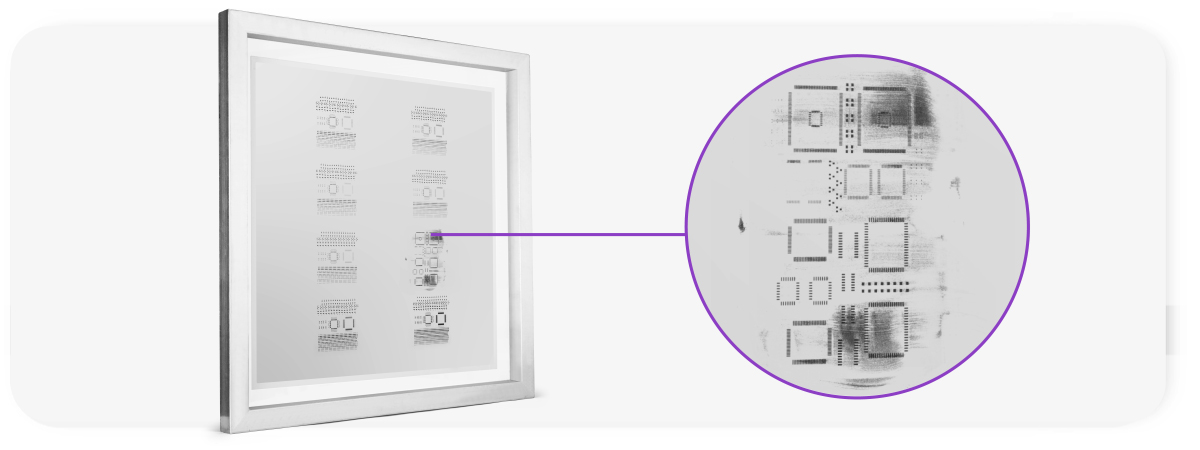
Common defects from poor cleaning
Poor cleaning leads to predictable defects that increase rework and reduce yield. Common stencil-related defects include:
-
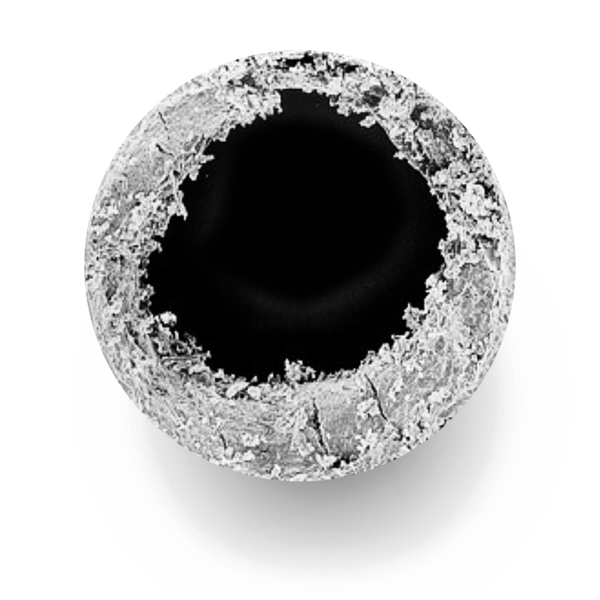
Insufficient paste, causing open or weak solder joints
-
Excessive paste, creating tombstoning or bridging
-
Smeared or elongated deposits that fail to wet correctly
-
Blinded apertures on fine-pitch components, reducing transfer
-
Particulate contamination that creates solder balling or voids
Empirical data from production environments show stencil contamination often manifests as intermittent defects, making root cause analysis difficult. ZESTRON’s process audits frequently identify cleaning gaps as primary contributors to unexplained print failures, and corrective cleaning strategies typically show measurable reductions in AOI and ICT false calls.
Cleaning methods for stencils
Selecting the right cleaning method depends on solder paste type, stencil aperture size, pitch, production rate, and safety/environmental considerations. There are three primary approaches: manual cleaning, automated cleaning systems, and ultrasonic cleaning for fine-pitch or micro-apertures. Each has trade-offs in throughput, consistency, and cost.
Effective stencil cleaning programs combine method selection, validated chemistries, and process controls. ZESTRON provides both chemistry and engineering support to match cleaning technology to production needs, from small prototype shops to high-volume contract manufacturers.
Manual cleaning techniques
Manual cleaning involves wiping or brushing stencils using solvents, wipes, or cleaning pads. It is common in prototyping labs and low-volume production due to low capital cost and flexibility. Typical manual techniques include:
-
Solvent wiping at the stencil surface with IPA or formulated cleaners
-
Use of lint-free wipes or brushes to dislodge paste
-
Hand scraping for stubborn crusted deposits
Manual cleaning is labor intensive and variable. Risks include inconsistent pressure, missed apertures, particulate generation, and operator exposure to solvents. To reduce these risks, use controlled procedures, PPE, and validated cleaning fluids. ZESTRON recommends operator training, standardized work instructions, and spot checks with stencil inspection tools when manual cleaning is used.
Automated cleaning solutions
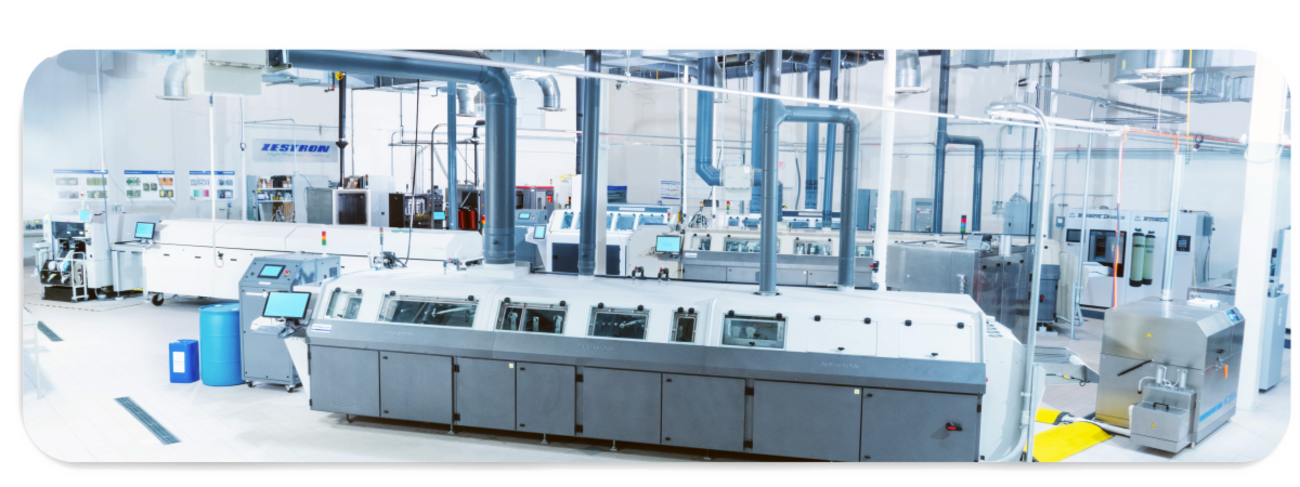
Automated stencil cleaners range from benchtop units to inline systems integrated with stencil printers. They deliver repeatable pressure, dwell time, and solvent distribution, improving consistency and throughput. Typical automated features:
-
Spray-and-vacuum or wash-and-blow cycles
-
Temperature control for cleaning solution chemistry
-
Programmable cycles for different stencil types
-
Filtration and solvent recovery to reduce waste
Automated cleaning reduces labor and yields reproducible results, which is critical for mid- to high-volume manufacturing. ZESTRON supplies chemistries compatible with major automated systems and offers process validation to ensure the chosen system meets transfer efficiency targets and regulatory constraints.
Ultrasonic cleaning for fine-pitch stencils
Ultrasonic cleaning uses cavitation to remove paste lodged in micro-apertures and is effective for fine-pitch and high-aspect-ratio apertures. Ultrasonic systems can be bath-type or integrated into automated lines, and work best with tailored cleaning chemistries that stabilize cavitation and break down flux binders.
Key points for ultrasonic cleaning:
-
Excellent for apertures below 0.4 mm pitch or slotted apertures
-
Must control frequency and power to avoid damage to thin metal foils
-
Requires rinsing and drying steps to prevent residue or corrosion
ZESTRON experiments demonstrate ultrasonic cleaning yields higher aperture recovery rates for the smallest geometries compared to spray-only methods. Proper chemistry selection and cycle optimization are essential to avoid stencil deformation or accelerated wear.
Challenges in stencil cleaning
Stencil cleaning faces practical and regulatory challenges. These include increasingly complex solder paste formulations, finer stencil geometries, and environmental, health, and safety requirements. Process engineers must balance cleaning efficacy with safety, cost, and stencil longevity.
ZESTRON’s technical centers help manufacturers navigate these challenges through lab testing, risk assessments, and process qualifications that quantify cleaning performance and material compatibility.
Residue issues with traditional methods
Traditional cleaning using high-volatility solvents such as isopropyl alcohol (IPA) can remove fresh paste but struggles with baked-on residues and some modern no-clean flux chemistries. Problems include:
- Re-deposition of residues after wiping
- Solvent evaporation before effective dissolution occurs
- Incomplete removal from slotted or tall apertures
Modern solder pastes often contain polymeric binders and low-residue fluxes that require more targeted chemistries or mechanical action. ZESTRON provides specific formulations formulated to dissolve contemporary flux chemistries and to reduce residue formation while being compatible with common stencil alloys.
Flammability and safety concerns
Many traditional solvents are flammable and pose occupational hazards. IPA remains ubiquitous in low-volume shops but introduces fire risk and increased VOC emissions. Safety concerns drive demand for less flammable, lower-VOC cleaning chemistries and enclosed automated systems.
Key safety measures include:
- Using closed-loop automated cleaners to limit vapor exposure
- Switching to low-flammability or aqueous-based chemistries
ZESTRON supports safer transitions by providing validated alternatives to flammable solvents and by offering on-site evaluations to confirm compliance with safety and environmental regulations.
Recent innovations in stencil cleaning
Innovation has focused on safer chemistries, smarter automation, analytics-driven maintenance, and hybrid approaches that combine mechanical and chemical cleaning. These advances aim to improve transfer efficiency, reduce exposure risk, and lower total cost of ownership.
ZESTRON plays a role in these innovations by developing low-VOC and nonflammable chemistries, providing analytical services, and partnering with equipment manufacturers to validate integrated solutions across production environments.

Shift from IPA to safer solutions
The industry trend is moving away from flammable solvents like IPA toward aqueous-based and low-VOC chemistries that offer comparable cleaning performance. Drivers include:
-
Regulatory pressure on VOC emissions
-
Safety programs reducing fire risk
-
Demand for better residue control on baked or aged paste
Aqueous and semi-aqueous formulations often require heating and more robust drying steps, but they provide consistent cleaning without flammability. ZESTRON offers a portfolio of validated chemistries tested across paste types and stencil materials, and helps customers qualify replacements with minimal process disruption.
Trends in automated systems
Automation trends center on integration, process feedback, and data capture. Modern systems offer:
-
Automated cycle optimization based on paste condition sensors
-
Integration with MES for traceability and maintenance scheduling
-
Energy-efficient solvent recovery and filtration
-
Modular designs to accommodate various stencil sizes and volumes
Predictive maintenance and analytics help reduce unscheduled downtime and ensure cleaning cycles align with actual paste condition, rather than fixed intervals. ZESTRON’s technical services include transfer efficiency testing and sensor-guided recommendations to support automation upgrades.
Best practices for effective stencil cleaning
Effective stencil cleaning programs combine appropriate methods, validated chemistries, scheduled inspection, and continuous improvement. Standardize procedures, document cycles, and use objective metrics like transfer efficiency and aperture inspection to gauge performance.
ZESTRON recommends a data-driven approach: measure print quality metrics, correlate defects to cleaning history, and iteratively adjust cycles and chemistries to reach target yields.
Hybrid cleaning techniques
Hybrid techniques blend mechanical and chemical actions to handle diverse contamination profiles. Examples include:
-
Spray plus brush cycles in automated units
-
Ultrasonic agitation followed by spray rinsing and hot-air drying
-
Pre-soak steps for heavily baked-on paste, then ultrasonic extraction
Hybrid approaches offer balance: aggressive aperture recovery for fine-pitch stencils, while avoiding excess mechanical stress. ZESTRON often prescribes hybrid cycles for high-mix manufacturers with mixed aperture sizes, achieving repeatable paste transfer and lower defect rates.
Frequency of cleaning based on production volume
Cleaning frequency should be driven by production parameters, not arbitrary daily schedules. Consider:
-
Paste type and tackiness
-
Print cycles per stencil (boards per hour, aperture usage)
-
Paste age and stencil aperture density
-
Historical defect trends and AOI feedback
Rule of thumb examples:
-
Low-volume prototype runs: clean between shifts or as defects appear
-
Mid-volume production: scheduled cleaning every several hundred prints, validated by transfer efficiency checks
-
High-volume lines: inline automated cleaning with cycle counts tied to board quantity or paste condition sensors
ZESTRON recommends establishing baseline metrics during process qualification and then using statistical process control to set cleaning intervals that minimize cost while maintaining quality.
Impact on production efficiency
Stencil cleaning has measurable effects on throughput, yield, and cost. Poor stencil maintenance increases inspection calls, rework hours, and scrap. Conversely, optimized cleaning improves first-pass yield and reduces downstream troubleshooting time.
ZESTRON’s implementation programs often include before-and-after studies documenting improvements in defect density and cycle time after applying validated cleaning solutions.
 Statistics on defects and rework
Industry and field data provide insight into the scale of stencil-related issues:
-
Solder paste deposition errors commonly account for a significant portion of AOI failures; field studies often cite 20 to 40 percent attributable to stencil issues.
-
Proper cleaning programs can reduce print-related defects by 30 percent or more in targeted trials.
-
Automated cleaning reduces labor by up to 60 percent compared to manual methods in mid- to high-volume operations.
These statistics highlight why investment in cleaning pays off quickly through yield improvement and lower rework labor. ZESTRON’s process audits commonly quantify defect reductions and provide ROI models tailored to customer lines.
Cost implications of poor stencil cleaning
Costs associated with poor cleaning include:
-
Direct rework and repair labor
-
Additional inspection and test cycles
-
Increased scrap and material waste
-
Production delays and missed delivery windows
-
Potential warranty returns for field failures
A simple cost model: if stencil-related defects cause 1 percent additional rework on a line producing 10,000 boards per month, and each rework costs $12, the annual cost exceeds $14,000. When combined with inspection overhead and scrap, the total impact grows. Investing in validated cleaning chemistry and automation, such as those provided by ZESTRON, often shows payback in months through reduced defect rates and lower labor.
Future of stencil cleaning in electronics manufacturing
The future will emphasize safer chemistries, smarter automation, inline analytics, and greater focus on fine-pitch and chip-scale packaging. Environmental compliance and operator safety will continue to drive chemistry innovation, while machine learning and sensors will refine cleaning cycles to actual stencil condition.
ZESTRON is positioned to contribute through R&D, validated chemistry portfolios, and global technical support to deploy future-ready cleaning strategies across diverse manufacturing contexts.
Emerging technologies and trends
Expect these developments to shape stencil cleaning:
-
Sensor-driven cleaning cycles that respond to real-time paste condition
-
Low-VOC and biodegradable chemistries that reduce environmental impact
-
Non-contact cleaning methods leveraging micro-abrasion or plasma for certain residues
-
Integration with Industry 4.0 systems for traceability and closed-loop quality control
These trends will reduce waste, lower exposure risks, and improve predictability. Early adopters who validate new methods will gain advantages in yield and compliance.
Conclusion: key takeaways from stencil cleaning
Stencil cleaning is foundational to reliable SMT assembly. It affects first-pass yield, defect rates, rework costs, and ultimately product reliability. Choosing the right cleaning method involves understanding paste chemistry, stencil geometry, production volume, and safety requirements.
Implement measurable cleaning programs:
-
Use data-driven intervals based on transfer efficiency and AOI trends
-
Prefer automated or hybrid solutions for mid- to high-volume production
-
Move to low-flammability chemistries for safety and compliance
-
Partner with experts such as ZESTRON to validate processes and reduce risk
A disciplined stencil cleaning program delivers repeatable prints, fewer defects, and measurable cost savings.
FAQ
Stencil clogging results from solder paste drying in apertures, flux binder build-up, and particulate lodging in apertures. Rate depends on paste formulation, ambient conditions, print rate, and aperture geometry. High-volume lines can accumulate measurable deposits after a few hundred prints, while low-volume lines may see issues after several shifts. Monitor transfer efficiency and AOI to detect early signs.
Choose manual cleaning for low-volume or prototype work due to low capital cost and flexibility. Choose automated cleaning for consistent results, higher throughput, and reduced labor in mid- to high-volume production. Consider stencil complexity as well; fine-pitch or high-density stencils often justify automated or ultrasonic systems. ZESTRON can run trials to determine the best fit for specific lines.
IPA is effective for fresh paste but has safety and VOC drawbacks. Many manufacturers are transitioning to safer aqueous or low-VOC chemistries that achieve equal or better residue removal, especially for baked-on paste. Evaluate alternatives with process validation; ZESTRON provides chemistry selection and comparative testing services.
Ultrasonic cleaning can damage thin or delicate stencils if frequency and power are not correctly controlled. Properly configured ultrasonic systems, matched to stencil thickness and material, deliver superior aperture recovery without damage. Use validated cycles and vendor guidance. ZESTRON conducts compatibility testing to prevent unintended damage.
Replacement depends on mechanical wear, aperture deformation, and plating loss. Typical life ranges from hundreds of thousands to millions of prints for robust stencils, but fine-pitch or high-aspect-ratio apertures degrade faster. Regular inspection and dimensional checks are essential. Effective cleaning extends life by preventing accumulated stress and abrasive residues.