Understanding Surface Insulation Resistance (SIR) in Electronics
Surface insulation resistance, or SIR, is a critical metric for electrical reliability in modern electronics. In practical terms, SIR quantifies how well the surface between conductors resists leakage current under controlled conditions, and it is used by OEMs, EMS providers, and test labs to predict long-term performance. Reliable SIR testing reduces field failures, supports regulatory compliance, and protects brand reputation.
Key fact: contamination-related electrical failures account for a meaningful share of latent defects in electronics; SIR testing directly links assembly cleanliness to field reliability. Companies like ZESTRON, a global leader in precision cleaning and process chemistry, use SIR data to optimize cleaning processes, lower defect rates, and maximize yield.
Key takeaways
-
SIR measures leakage resistance between conductive features on an assembly and is reported in ohms or ohms per square.
-
SIR identifies contamination and ionic residues that increase leakage and create paths for dendritic growth.
-
Environmental factors - humidity, temperature, bias voltage - strongly affect SIR test outcomes.
-
IPC standards and manufacturer specifications guide acceptable SIR levels, with J-STD-001H commonly cited.
-
ZESTRON combines SIR testing, analytical services, and tailored cleaning chemistries to solve contamination issues and validate processes.

Introduction to surface insulation resistance (SIR)
SIR is not a theoretical concept; it is an applied electrical test used across electronics manufacturing to quantify surface resistivity and detect potential failure modes. It helps answer the simple question: will contaminants or residues on the board create a conductive path under expected operational conditions?
Manufacturers use SIR data to set cleanliness specifications, evaluate flux and cleaning chemistries, and verify that rework and repair do not compromise performance. SIR testing also supports root cause analysis when field failures occur. That makes it a practical tool for product reliability programs.
ZESTRON integrates SIR testing into consulting, analytical, and process validation services. Their technical centers worldwide provide controlled SIR testing to correlate cleaning process parameters with electrical risk, enabling data-driven decisions for customers across industries.
Defining surface insulation resistance
Surface insulation resistance is the resistance measured between two electrodes printed on an insulating substrate, typically under a defined bias voltage and environmental stress. The test quantifies leakage current across the surface; higher resistance means lower leakage and better insulation.
Common test formats use standardized patterns - for example, 0.050 inch spacing comb patterns - and measure resistance over time under bias at elevated humidity and temperature. Results are reported as resistance in ohms or as ohms per square, and typically compared to target thresholds set by industry standards or customer requirements.
SIR differs from dielectric breakdown testing in that it looks at leakage and progressive degradation rather than catastrophic failure. It is sensitive to ionic contamination, flux residues, and weakly conductive films that do not immediately short but will degrade performance over time.
 Importance of SIR in electronics
SIR predicts latent failures before devices are deployed. Low SIR readings indicate contamination or inadequate cleaning and correlate with increased risk of leakage, corrosion, and dendritic growth.
Key practical consequences include:
-
Increased field returns and warranty costs.
-
Unexpected failures in humid or high-voltage conditions.
-
Regulatory risk where product safety depends on isolation performance.
Companies that adopt routine SIR testing reduce rework and improve yield. ZESTRON reports that combining SIR analysis with targeted cleaning chemistry selection has helped many customers meet stringent reliability targets in high-reliability markets such as automotive, aerospace, and medical devices.

Mechanics of surface insulation resistance testing
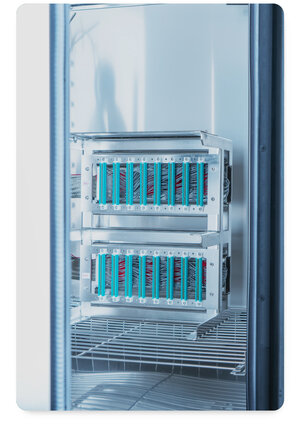
SIR testing requires reproducible test vehicles, controlled environmental chambers, precision measurement instruments, and established test protocols. The goal is to stress the assembly in a way that accelerates any leakage pathways created by contamination.
Typical SIR test parameters include:
-
bias voltage (commonly 10 V to 100 V depending on the test vehicle),
-
relative humidity (often 85 percent),
-
temperature (commonly 85 degrees C),
-
duration (ranging from 24 to 168 hours or more),
-
and periodic measurement intervals.
Results are tracked over time to observe trends. A stable high resistance suggests good insulation, while falling resistance indicates electrolytic activity, ion migration, or film conductivity developing into a failure.
How SIR testing works
A SIR test begins with a test board patterned with interdigitated electrodes or serpentine traces. The board receives a controlled deposition of flux residues, cleaning residues, or actual process residues under study. Once prepared, the board is placed in an environmental chamber set to specified humidity and temperature.
A DC bias is applied between electrodes while an electrometer or sensitive resistance meter measures leakage current. Readings are logged at regular intervals. The test evaluates both initial resistance and changes over time, identifying progressive degradation.
Key measurement outputs include:
Initial SIR value
Time to specified drop thresholds
Leakage current profile
Any occurrence of resistance below acceptance limits
ZESTRON uses calibrated test vehicles and traceable instrumentation in its technical centers to ensure consistency and comparability across customer studies.
Environmental conditions and their impact
Environmental stressors change surface conductivity dramatically. Humidity provides a medium for dissolved ions to move; temperature increases ionic mobility and reaction rates; applied voltage drives electrochemical migration.
Typical impacts:
- Humidity increases leakage exponentially as thin films adsorb moisture;
- Higher temperature accelerates chemical reactions that create conductive byproducts;
- Higher bias speeds ion migration and dendritic initiation.
SIR results must be interpreted in the context of realistic operating conditions. For example, an assembly that passes at room conditions but fails at 85 percent RH and 85 degrees C signals risk for products used outdoors or in tropical climates.
Manufacturers set acceptance criteria based on expected service environments. ZESTRON helps customers choose test profiles that match field conditions and provides guidance on environmental margins for safety.
Standards and compliance in SIR testing
Industry standards provide methodology and acceptance criteria for SIR testing. Using recognized standards helps ensure consistent results across labs and suppliers, which supports procurement decisions and regulatory submissions.
Standards also define test vehicles, electrode geometries, durations, and pass/fail criteria. For regulated industries, documented SIR testing can be essential evidence during audits or failure investigations.

Industry standards: IPC J-STD-001H
IPC J-STD-001H covers requirements for soldered electrical and electronic assemblies and includes guidance related to cleanliness and contamination control. While SIR itself is more directly covered in other IPC documents such as IPC-TM-650 method 2.6.3.3 or IPC-CC-830, J-STD-001H references cleanliness as a quality attribute and aligns with the need to control residues that affect insulation resistance.
Key takeaways from industry standards:
-
standardized methods exist for SIR measurement and sample preparation,
-
electrode geometry and spacing are specified to ensure comparable results,
-
acceptance criteria should reflect assembly function and expected environment.
ZESTRON uses these standards as a baseline in testing protocols and documents deviations or customer-specific requirements clearly in reports.
Regulatory compliance and quality assurance
Regulated sectors such as medical and aerospace require documented risk management for electrical performance. SIR testing supports risk assessments such as failure modes and effects analysis (FMEA) and provides measurable evidence for design transfer and production release.
Quality assurance programs incorporate SIR data for:
-
incoming material qualification,
-
process validation after cleaning changes,
-
supplier audits,
-
and post-failure root cause analysis.
ZESTRON’s laboratory reports align with audit needs, including traceable instrumentation calibration, raw data logs, and interpreted results that link SIR performance to process actions.
Impact of flux residues on SIR testing
Flux residues from soldering are among the most common contaminants affecting SIR. Flux chemistry - rosin, water-soluble, no-clean - and the completeness of cleaning determine residue conductivity.
Residues can be ionically conductive, hygroscopic, or chemically active, and their effects are magnified under humidity and bias. Understanding residue chemistry and behavior is key to controlling SIR risk.
Flux residue types and their effects
Common flux families and their characteristics:
-
rosin-based fluxes: can leave organic films that may oxidize or become conductive when aged,
-
water-soluble fluxes: generally leave ionic residues if not fully rinsed, creating high leakage risk,
-
no-clean fluxes: designed to leave low residues, but improper process parameters can still create problematic films.
Effects of residues:
-
increased leakage current under humid conditions,
-
accelerated corrosion at metal residues,
-
increased propensity for dendritic growth where ionic concentration and bias coincide.
ZESTRON evaluates flux residues chemically and electrically, matching cleaning chemistries to flux types to ensure both removal and compatibility with board materials.
Measuring electrical reliability
Measuring SIR directly quantifies electrical risk. To translate SIR into field reliability, teams should correlate test outcomes with known failure modes and margin requirements for the application.
Practical steps:
-
define the worst-case operating environment for the product,
-
select SIR test parameters that reflect that environment,
-
set acceptance limits based on voltage and spacing for functional safety,
-
perform accelerated aging or extended duration tests to expose slow-developing issues.
ZESTRON combines SIR data with surface analysis - ion chromatography, Fourier-transform infrared spectroscopy, and contact angle measurements - to provide a complete picture of residue type, quantity, and the corresponding electrical impact.

Consequences of SIR failures
Low SIR readings are not just numbers; they predict tangible field problems. Consequences include intermittent failures, short circuits, and safety hazards in high-voltage systems.
The financial and reputational costs of SIR-related failures can be significant, including recalls, warranty claims, and loss of customer trust. Early detection through SIR testing prevents costly downstream issues.
Common causes of SIR failure
Causes typically fall into process, materials, or design categories:
-
inadequate cleaning after soldering or wave processes,
-
flux formulations that are incompatible with substrate or subsequent coatings,
-
rework or repair that introduces residues without proper cleaning,
-
environmental exposure during storage or assembly that deposits contaminants,
-
design features with fine pitch or narrow spacing that are sensitive to small contamination levels.
Process control, supplier qualification, and design-for-reliability practices reduce these risks. ZESTRON’s consulting services focus on identifying root causes and implementing corrective actions that address the specific failure mode.
 Dendritic growth and its risks
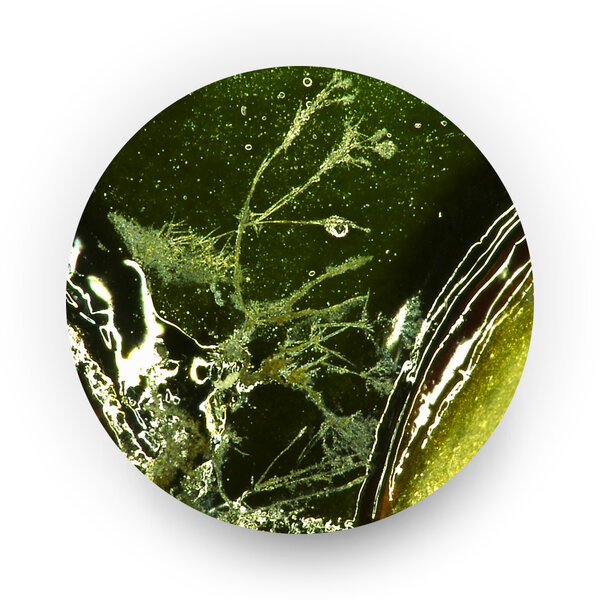
Dendrites are metallic filaments that grow between conductors under bias, forming low-resistance paths and causing shorts. Dendritic growth requires three elements:
-
a conductive medium, often ionic residues and moisture,
-
an electrical bias,
-
susceptible metallization, commonly copper.
Dendritic growth can be fast once initiated, especially under high humidity and voltage. SIR testing typically reveals early signs of dendritic initiation via decreasing resistance curves. Mitigation strategies include improved cleaning, conformal coatings, material selection, and design spacing adjustments.
ZESTRON provides dendrite-focused analysis and remediation strategies, including coating selection and process validation to prevent filament formation.
ZESTRON's role in SIR testing
ZESTRON is positioned as a practical partner for manufacturers addressing SIR risk. With over 30 years of experience, eight technical centers worldwide, and servicing more than 2,500 customers, ZESTRON offers the combined chemistry knowledge and analytical capability required to link SIR data to actionable process changes.
Services include lab-based SIR testing, contamination analysis, cleaning chemistries, process design, and training. ZESTRON’s process installations exceed 3,000 globally, demonstrating a track record for translating test results into production improvements.
ZESTRON's SIR testing capabilities
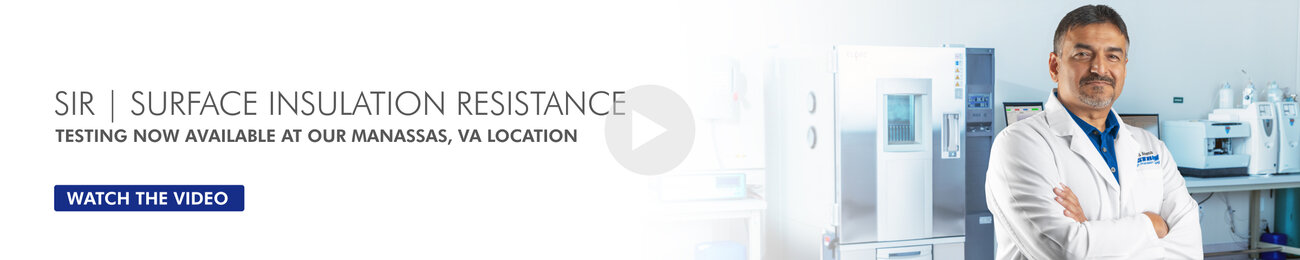
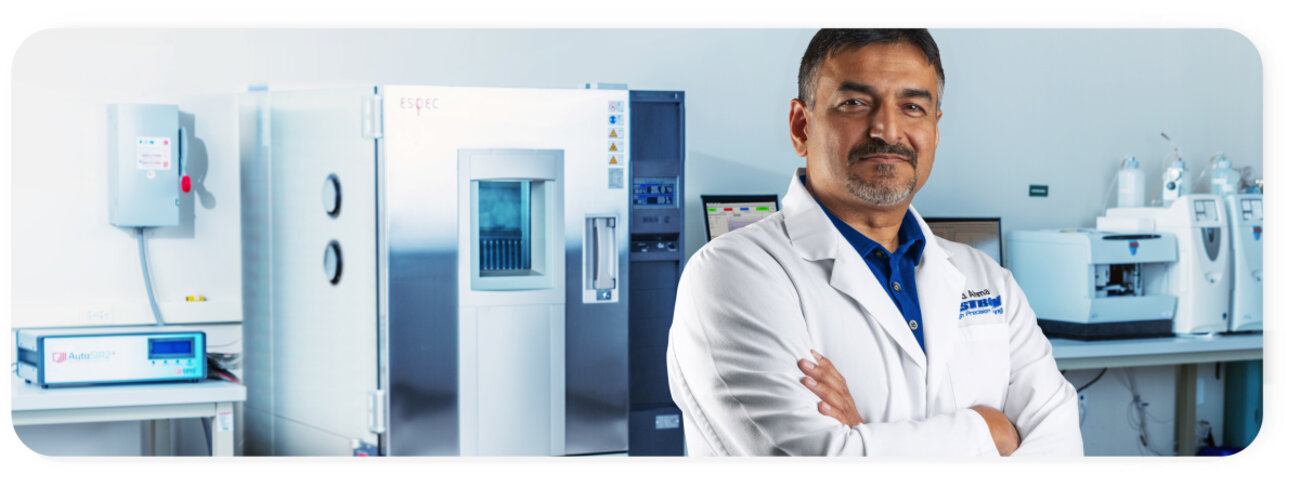
ZESTRON’s technical centers feature:
-
calibrated SIR chambers that control temperature and humidity,
-
standardized and custom test vehicles for realistic simulation,
-
traceable electrometers and data logging for extended tests,
-
integrated surface analysis tools: ion chromatography for ionic residues, FTIR for organic identification, and XPS for surface chemistry.
ZESTRON offers turnkey studies that correlate specific fluxes and cleaning processes to SIR outcomes, providing customers with clear acceptance criteria and validated process windows.
ZESTRON’s reports include raw data, interpreted SIR trends, recommended process changes, and verification testing to confirm corrective actions. This ensures customers have both the evidence and path to corrective implementation.
How ZESTRON supports customers
ZESTRON supports customers through:
-
process audits to identify contamination sources
-
comparative testing of cleaning chemistries and methods
-
training for production staff on optimized cleaning workflows
-
implementation support for new cleaning agents or equipment
-
long-term monitoring and periodic revalidation
Practical examples include reducing required cleaning cycles while maintaining SIR performance, selecting lower-impact chemistries for environmental compliance, and supporting new product introductions with qualification testing.
ZESTRON’s consulting emphasizes measurable outcomes - improved yield, lower return rates, and validated compliance - all tied back to objective SIR metrics.
Case studies and real-world applications
SIR testing has practical benefits in many industries. Examples range from high-volume consumer electronics to mission-critical aerospace systems where failure is not an option.
Organizations that adopt SIR-driven workflows typically see measurable improvements in field reliability and process efficiency. The cases below illustrate how focused testing and chemistry choices produce results.
Successful implementations of SIR testing
Example 1: a mid-sized automotive supplier observed intermittent field failures in humid climates. ZESTRON conducted SIR testing on production boards, identified a water-soluble flux residue issue, and recommended a validated aqueous cleaning process. Result: a 70 percent reduction in field returns over 12 months.
Example 2: a medical device manufacturer needed to validate a no-clean flux for a new assembly. ZESTRON ran long-duration SIR testing at 85 percent RH and 85 degrees C and found marginal performance. Switching to a different no-clean formulation and optimizing preheating reduced leakage risk and enabled regulatory submission.
Example 3: a power electronics OEM had high-voltage isolation concerns. SIR and surface analysis identified ionic contamination introduced during conformal coating. Process changes and post-coating cleaning reduced leakage and met dielectric safety margins.
These outcomes show SIR testing’s role in practical decision-making, not just laboratory curiosity.
Feedback from ZESTRON clients
Clients frequently cite clarity and speed as key benefits of working with ZESTRON. Comments include:
-
"ZESTRON’s SIR testing gave us the data to stop guessing and start fixing."
-
"Their reports were audit-ready and helped us pass a critical customer audit."
-
"We reduced cleaning cycle times and saved costs while improving reliability."
ZESTRON combines technical reporting with actionable steps, which customers value when translating test results into shop-floor practice.
Future trends in SIR testing and electronics
As electronics become smaller, denser, and operate at higher voltages, SIR testing will grow in importance. New materials, advanced packaging, and stricter safety requirements drive the need for more precise contamination control and test methods.
Emerging trends include automated in-line cleanliness verification, higher-sensitivity SIR instrumentation, and integrating SIR data with manufacturing execution systems for real-time quality control.
Technological advancements
Key technological developments shaping SIR testing:
-
improved electrometers with lower noise floors, enabling detection of smaller leakage currents,
-
advanced test vehicles that replicate fine-pitch and flex-circuit features,
-
environmental chambers with rapid ramping for stress profiling,
-
machine learning applied to trend analysis for early warning of process drift.
ZESTRON invests in state-of-the-art instrumentation across its technical centers and leverages data analytics to help customers detect subtle shifts before they become failures.
Evolving industry standards
Standards bodies continue to refine SIR-related guidance to reflect new materials and processes. Expect:
-
updated test forms to address microvias, embedded components, and conformal coatings,
-
harmonization across IPC and IEC for global suppliers,
-
clearer guidance on translating accelerated test results into field-life predictions.
ZESTRON participates in standards discussions and helps customers adapt to new requirements quickly, providing templates and documented test evidence to support compliance.
Conclusion: the importance of understanding SIR
Surface insulation resistance is a measurable, actionable predictor of electrical reliability. SIR testing links chemistry, process, and environment to performance and helps engineers make evidence-based decisions. For manufacturers aiming to reduce failures, improve yields, and meet regulatory and customer expectations, SIR testing is central to any contamination control strategy.
Frequently asked questions about SIR
Pass/fail thresholds vary by application, spacing, and voltage. For many electronic assemblies tested at 10 V, an SIR greater than 1 x 10^9 ohms is often considered excellent. However, automotive high-voltage systems may require higher margins, while consumer electronics may accept lower values depending on risk analysis. Establish thresholds based on the operating environment, required insulation, and safety margins.
Common durations range from 24 hours for screening to 168 hours (one week) for qualification. Extended tests as long as 1,000 hours can be useful for mission-critical systems. The key is selecting a duration that accelerates likely degradation mechanisms and aligns with product life expectations. ZESTRON recommends multiple duration tiers for comprehensive assessment.
Conformal coatings reduce surface leakage and limit dendritic growth but do not remove the need for SIR testing. Coatings can mask underlying contamination, and defects or pinholes can create localized failures. SIR testing prior to coating and post-coating validation both have roles in assurance. ZESTRON advises validating both cleaning and coating processes with electrical testing.
SIR measures electrical consequences; ion chromatography quantifies ionic species present on a surface. High ionic content typically correlates with lower SIR, but the relationship depends on ion type, distribution, and environmental exposure. Using both techniques together provides chemical and electrical perspectives, enabling targeted remediation. ZESTRON commonly pairs SIR and ion chromatography in root cause studies.
Practical, cost-effective measures include:
- select fluxes with known low-residue profiles for your assembly,
- implement validated cleaning processes with documented SIR outcomes,
- establish incoming inspection for cleaning chemistries and residues,
- train operators on rework and cleaning best practices,
- use design rules that provide adequate spacing and guard traces where possible.
ZESTRON’s consulting can help prioritize interventions that deliver the largest reliability.