Effective Techniques for Removing Flux Residue from PCBs
Flux residue removal is a critical step in electronics assembly, and the right technique ensures long-term reliability and yield. More than 30 years of industry data show cleaning processes reduce field failures and improve component lifetimes, and ZESTRON has helped install over 3,000 cleaning processes worldwide. This article presents practical, data-backed methods for removing flux residue from printed circuit boards, with clear guidance on manual and advanced cleaning methods, testing protocols, and real-world examples.
Key takeaways:
-
Flux residue varies by flux chemistry and requires matched cleaning strategies.
-
Manual methods using IPA work for small runs, but process controls are essential.
-
Ultrasonic, vapor degreasing, and batch inline spray systems provide high-throughput, repeatable cleaning.
-
ZESTRON offers validated chemistries, process support, and analytical services to optimize cleaning and maximize yield.

Understanding flux residue and its impact
Flux residue is the nonvolatile material left on a PCB after soldering. It consists of flux activators, solvents, rosins, additives, and reaction byproducts. Residue chemistry varies widely, and residues can be organic, ionic, or mixed. Understanding what remains on the board guides the choice of cleaning chemistry and method.
The industry tracks several key metrics tied to flux residue: ionic contamination levels, conformal coating adhesion, and circuit reliability under humidity and bias. For high-reliability applications, acceptable ionic contamination often falls below 0.1 microgram NaCl equivalent per square centimeter. ZESTRON’s analytical tests, such as ion chromatography and surface insulation resistance (SIR), help quantify residue and define acceptable limits.
Cleaning must be validated through objective measurements. Visual cleanliness is not sufficient for high-reliability designs. Use analytical methods, defined acceptance criteria, and process controls to ensure consistent removal and to prevent yield losses and field failures.
What is flux?
Flux is a chemical formulation applied to metal surfaces during soldering to remove oxides and promote wetting. Flux can be rosin-based, water-soluble, or no-clean, and it contains activators, solvents, and rosin or synthetic resins. Activators chemically react with oxides, while solvents carry the active components and then evaporate during reflow.
Flux remains in different physical forms after soldering: volatilized components dissipate, but rosin or synthetic resins and reaction products can remain as tacky or hard residues. Some residues are benign, while others are corrosive or hygroscopic. Manufacturers specify flux percent solids and activator types to predict residue behavior. ZESTRON’s product data sheets and process support help users interpret flux formulations and plan cleaning strategies.

Why remove flux residue?
Removing flux residue enhances long-term electrical reliability, especially for assemblies exposed to moisture or bias. Ionic residues attract moisture and create leakage paths, lowering surface insulation resistance and increasing the risk of dendritic growth and corrosion. In systems operating at elevated voltages, even small residues can create leakage paths and cause intermittent failures.
Flux residue also affects coating adhesion, mechanical bonding, and thermal performance. For conformal coating, residual rosin can prevent proper wetting and reduce protective layer integrity. Many OEMs and defense customers mandate residue removal and test acceptance criteria. ZESTRON’s experience shows that implementing validated cleaning reduces early life failures and increases first-pass yield for complex assemblies.
Consequences of ignoring flux residue
Ignoring flux residue creates risks that range from cosmetic issues to catastrophic failures. Short-term effects include poor conformal coating adhesion and erratic in-circuit test results. Medium-term issues include increased leakage currents and corrosion under humidity. Long-term consequences can include dendritic growth, insulator breakdown, and field returns.
Failure modes tied to residue include electrolytic corrosion at component leads, metal migration between traces, and insulation resistance degradation. The financial impact can be significant: field returns, rework costs, warranty claims, and damage to reputation. For regulated industries, noncompliance can delay product launches. ZESTRON’s case studies demonstrate measurable reductions in failure rates after cleaning implementation and validation.
Types of flux residue
Flux residue chemistry determines its solubility, aggressiveness, and required removal method. Recognizing flux type guides process engineers in specifying cleaning agents, exposure times, and equipment. Three common flux families cover most electronic assembly processes: rosin-activated, water-soluble, and no-clean.
Selecting an improper cleaning method for a given flux can waste resources and damage assemblies. For example, aggressive solvents can damage polymeric components, while weak detergents may not remove ionic residues. ZESTRON evaluates flux chemistry against board materials to recommend suitable cleaning chemistries and process windows for reliable removal.
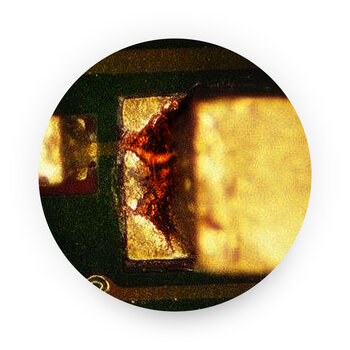 Rosin-activated flux
es contain natural or hydrogenated rosins plus activators. They leave tacky or hard residues after reflow, and their residues are largely organic but can contain acidic activation products. RA flux residues often require organic solvents or alkaline cleaners for complete removal.
RA fluxes can be compatible with manual IPA wiping for spot cleaning, but full-board removal for high-reliability applications typically uses ultrasonic or spray-in-air systems with formulated chemistries. ZESTRON’s solvent-based and aqueous cleaners are formulated to dissolve rosin matrices while minimizing material compatibility issues. RA residues often show higher ionic content if activators are not fully neutralized and removed.
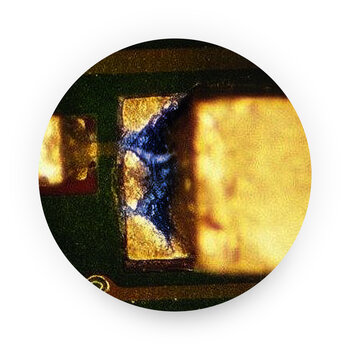 Water-soluble flux
es use organic acids and are designed to be removed with aqueous cleaning. They generally leave residues that are highly soluble in water but can be hygroscopic and corrosive if left on the board. These fluxes are preferred in some production lines because they enable easy removal with hot deionized water and detergents.
Aqueous cleaning systems, including spray-in-air and immersion, efficiently remove water-soluble flux residues. However, rinsing and dry-off must be controlled to prevent recontamination. ZESTRON’s process analytics and drying solutions help maintain low ionic contamination and minimize corrosion risk when using water-soluble flux systems.
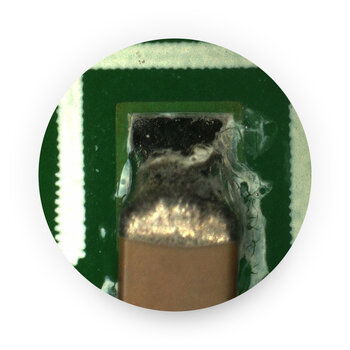 No-clean flux
es are formulated to leave minimal, nonconductive residues that do not require removal for many applications. Typical no-clean residues are low in ionic content and designed to remain on the PCB without compromising performance. However, no-clean does not mean no risk.
In high-reliability or conformal coating applications, even no-clean residues may interfere with adhesion or long-term reliability. Additional cleaning or selective cleaning may still be required. ZESTRON advises process engineers to verify residue properties and run acceptance tests rather than assuming no-clean is universally acceptable.
Techniques for removing flux residue
Choosing a removal technique depends on flux chemistry, board complexity, production volume, and compliance requirements. Effective cleaning combines the right chemistry, equipment, and process controls. Below are standard methods, from simple manual cleaning to advanced inline systems.
Manual methods serve prototyping and low-volume needs, while automated systems deliver consistent cleanliness and throughput for production. Each method has trade-offs between cost, footprint, cycle time, and material compatibility. ZESTRON evaluates assemblies for the optimal wash method and offers validated chemistries and process conditions to achieve repeatable results.
-
Manual cleaning methods
Manual cleaning remains common in labs and low-volume manufacturing. It includes spot cleaning with swabs, ultrasonic pens, or wiping with solvent-soaked wipes. Manual methods are low cost and flexible, but they depend heavily on operator skill and consistency.
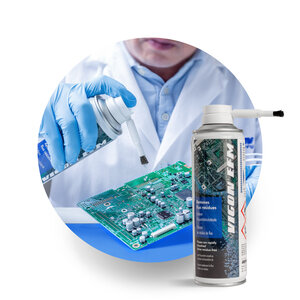 To reduce variability, define standard operating procedures with defined solvents, wipe materials, contact times, and verification steps. For ionic contamination, rely on analytical checks, not visual inspection. ZESTRON offers recommendations and training to standardize manual cleaning procedures and minimize rework while ensuring process repeatability where manual work is unavoidable.
-
Use of isopropyl alcohol (IPA)
Isopropyl alcohol is widely used for manual residue removal because it dissolves many organic flux residues and evaporates cleanly. IPA is effective for minor spot cleaning, soldering touch-ups, and removing smudges. A 70 to 99 percent IPA solution is common, depending on residue type and material compatibility.
Limitations of IPA include limited effectiveness on water-soluble ionic residues and flammability. Use proper ventilation and grounding to avoid ignition risks. For large-area cleaning, IPA is inefficient and costly. ZESTRON recommends IPA for targeted cleaning only, and prefers formulated cleaners for production-scale processes and for fluxes with high ionic content.
-
Application techniques
Effective application techniques matter for manual cleaning. Use lint-free wipes, swabs, brushing with controlled force, and flow-direction wiping to avoid redistributing residues. For sensitive components, use minimal solvent volume and avoid prolonged exposure of plastics and adhesives.
Define a cleaning sequence: pre-wipe to remove bulk contamination, wet scrub or swab to dissolve residue, rinse if necessary, and dry with filtered compressed air or bake. Document dwell times, agitation methods, and inspection checkpoints. ZESTRON provides process guidelines that help optimize manual techniques while preserving component integrity.
Advanced cleaning methods
Automated cleaning methods provide repeatability, throughput, and process control required for production environments. These methods include ultrasonic immersion, vapor degreasing, and batch inline spray systems. Proper selection depends on board density, component fragility, flux chemistry, and cleanliness requirements.
Automated systems also integrate controls for temperature, chemistry concentration, and rinse quality to ensure consistent results. ZESTRON supplies validated chemistries for each technology and supports process setup, trial runs, and analytical verification to minimize ramp time and ensure compliance.

Ultrasonic cleaning
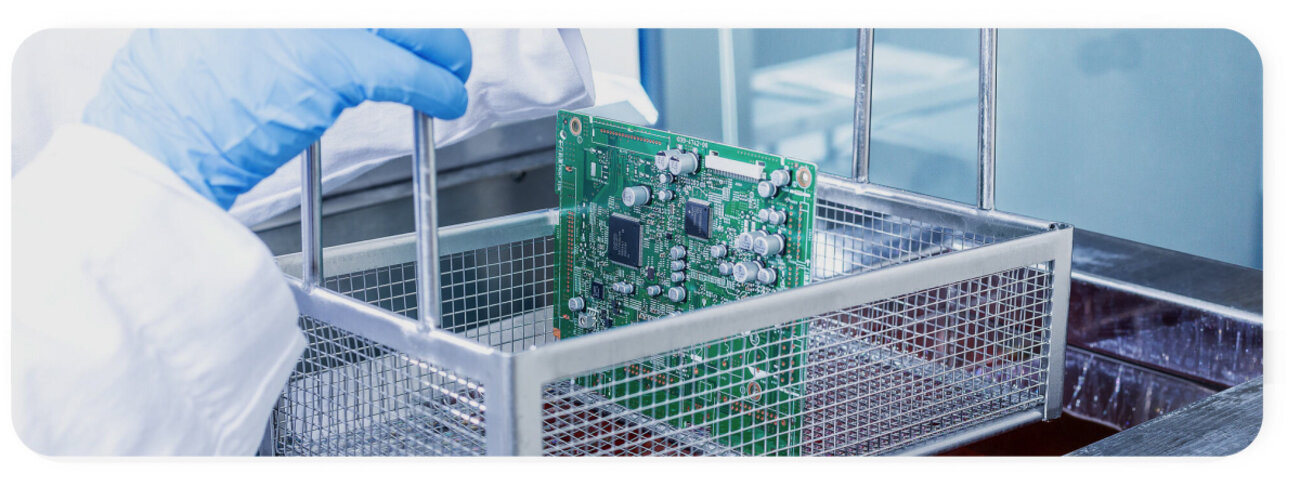
Ultrasonic cleaning uses cavitation in aqueous or solvent baths to dislodge flux residues from complex geometries. It is highly effective for assemblies with dense components, through-hole leads, and areas inaccessible to spray. Frequency, power, temperature, and chemistry concentration determine cleaning efficiency.
Ultrasonic cleaning works best with formulated detergents that lower surface tension and emulsify residues. Control parameters to prevent component damage from excessive cavitation or sonic energy. ZESTRON clients use ultrasonic systems combined with staged rinses and deionized water to meet low ionic contamination targets.
Vapor degreasing
Vapor degreasing uses boiling solvents to create a condensate that washes residues off the board. Modern systems often use hydrofluoroether or biodegradable solvents that provide excellent solvency and rapid drying. Vapor degreasing is effective for removing organic, rosin-based residues without mechanical agitation.
Consider material compatibility, solvent regulations, and solvent capture requirements. Some solvents have low global warming potential but higher cost. ZESTRON evaluates vapor degreasing chemistry against board materials and provides test data to ensure no adverse effects on components or plastics.
Batch inline spray systems
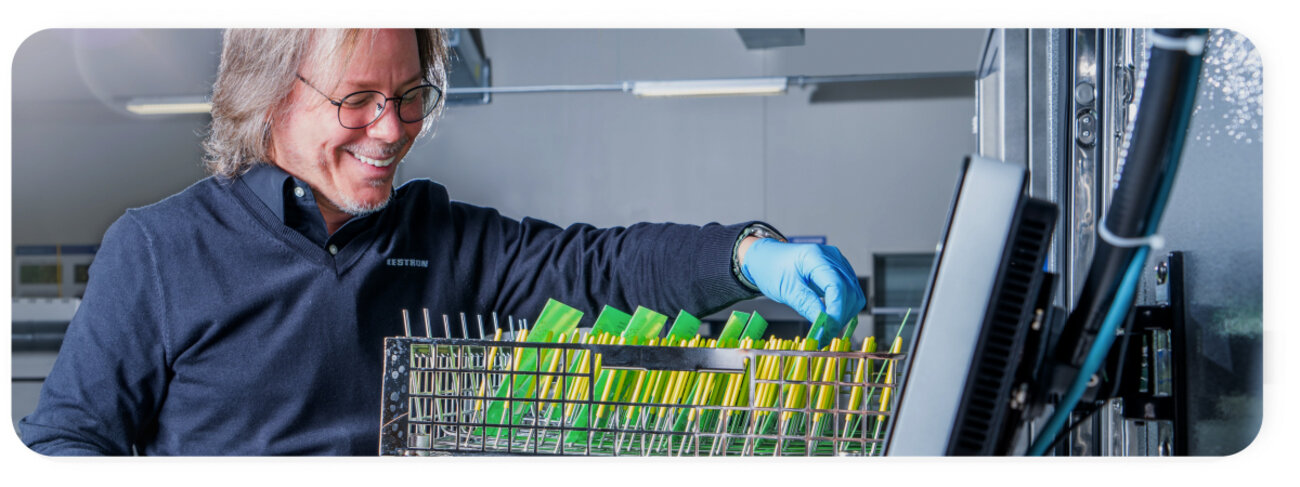
Batch inline spray systems, or conveyorized spray-in-air cleaners, combine high-pressure spray, controlled chemistry, and staged rinsing to clean PCBs in production. They handle large volumes and can be configured with multiple wash and rinse stages, filtration, and heat-assisted drying.
These systems offer strong process control and repeatability, making them suitable for high-mix, medium-to-high-volume manufacturing. ZESTRON provides process chemistry formulated for spray systems and helps customers optimize cycle times, flow rates, and rinse strategies to meet contamination limits and throughput targets.
Cleaning best practices
Implementing best practices prevents common pitfalls and ensures cleaning is effective and repeatable. Focus on process design, validation, control, and continuous monitoring. Use objective measurements rather than visual inspection to verify cleanliness.
Document procedures, train operators, and integrate cleaning into overall process control. Maintain chemical management programs for concentration checks, bath life, and waste handling. ZESTRON’s technical centers provide training, process audits, and analytical services to validate cleaning results and support continuous improvement.
Prevention with reflow profiles
Optimizing reflow profiles reduces flux degradation and minimizes difficult-to-remove residues. Use proper time above liquidus, controlled peak temperatures, and optimized cooling rates to promote complete flux activation and volatilization of solvents. Reducing excess flux application in stencil printing also lowers residue loads.
Profiling tools and thermal cameras help tune reflow ovens. Some fluxes perform better with slightly different profiles. ZESTRON recommends coordination between process engineers and materials suppliers to balance solder joint quality and residue characteristics for easier cleaning downstream.
Testing and validation
Testing validates that cleaning meets product requirements. Typical tests include ion chromatography for ionic contamination, surface insulation resistance, visual inspection under magnification, and contact angle measurements for surface energy. Define acceptance criteria based on application, industry standards, and customer requirements.
Run initial process trials, then perform full validation with statistical sampling. Establish control charts for key parameters like bath conductivity, rinse resistivity, and concentration. ZESTRON offers analytical labs to perform these tests, correlate results with process parameters.
Choosing the right cleaning agent
Selecting the right cleaning agent depends on flux type, material compatibility, equipment, and environmental regulations. Consider efficacy, toxicity, flammability, biodegradability, and waste treatment needs. Use small-scale testing to screen candidates before committing to production trials.
A comparison table helps illustrate options:
|
Cleaning Technology |
Typical Chemistries |
Best For |
Notes |
|
manual IPA |
isopropyl alcohol 70-99% |
spot cleaning, prototyping |
flammable, limited ionic removal |
|
aqueous detergents |
alkaline or neutral cleaners |
water-soluble flux, no-clean residues |
requires rinse and drying controls |
|
solvent-based |
hydrofluoroethers, terpenes |
rosin residues, vapor degreasing |
cost and regulation vary |
|
formulated chemistries |
ZESTRON specialty cleaners |
production inline and ultrasonic |
validated for materials and flux types |
ZESTRON formulates cleaners tailored to specific flux chemistries and equipment types, and provides material compatibility data to prevent damage to plastics, adhesives, and coatings.
ZESTRON's role in PCB cleaning solutions
ZESTRON positions itself as a global leader in precision cleaning solutions, offering chemistry, process technology, and analytical services. With over 30 years of experience and eight technical centers worldwide, ZESTRON supports more than 2,500 customers and has installed over 3,000 cleaning processes. The company couples product offerings with process validation and training.
ZESTRON’s services include trial cleaning, chemistry selection, process parameter development, analytical testing, and long-term support. Their technical teams help manufacturers meet industry standards, reduce rework, and improve yields. Examples include optimizing chemistries for high-density interconnects and reducing cycle time in inline spray systems.
 Overview of ZESTRON products
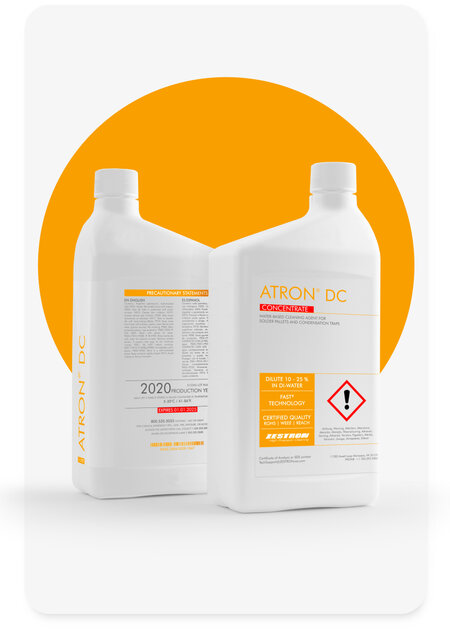
ZESTRON offers a portfolio of aqueous chemistries, solvent-based cleaners, and process control additives designed for electronics manufacturing. Products target flux families, deposit types, and equipment. They provide data on material compatibility, bath life, and concentration control.
Key offerings include cleaners formulated for no-clean flux activation, aqueous detergents for water-soluble flux, and specialty solvents for stubborn rosin residues. ZESTRON also provides bath management solutions, conductivity and concentration monitoring, and disposal guidance. Their technical data sheets and validation reports help engineers choose and implement the right chemistry.
Real-world applications and success stories
ZESTRON’s customer case studies show measurable improvements in yield and reliability. One OEM reduced field returns by over 60 percent after implementing a ZESTRON-formulated aqueous spray process and establishing ion chromatography acceptance limits. Another high-reliability customer improved conformal coating adhesion by introducing a pre-coating cleaning step validated by ZESTRON’s labs.
These successes rely on combined expertise in chemistry, equipment, and analytics. ZESTRON’s process trials often identify subtle issues like reflow profile adjustments or the need for additional rinse stages. Their global technical centers allow localized support for trialing chemistries on customer assemblies and validating outcomes.
Current trends in PCB cleaning
The PCB cleaning industry evolves with environmental regulations, material innovations, and manufacturing demands. Trends include moving toward greener chemistries, tighter regulatory control, and innovations in equipment that improve efficiency while reducing chemical usage and waste.
Manufacturers focus on reducing solvents with high global warming potential, improving bath life, and integrating in-line monitoring for real-time process control. ZESTRON tracks these trends and updates formulations to meet new regulations while maintaining cleaning performance and material compatibility.
 Shift to eco-friendly solutions
Manufacturers increasingly prefer low-VOC, biodegradable, and nonflammable chemistries. Advances in aqueous detergents and biodegradable solvents allow effective flux removal with lower environmental impact. Many companies set corporate sustainability targets that drive the selection of eco-friendly cleaning agents.
Eco-friendly does not mean less effective. ZESTRON develops cleaners that balance environmental profiles with solvency and rinseability. They provide life cycle analysis and waste treatment guidance to help companies meet sustainability goals while maintaining process reliability.
Regulatory influences on cleaning methods
Regulations on volatile organic compounds, solvent emissions, and hazardous waste shape cleaning choices. Compliance with local and international regulations can impact solvent choice and equipment design. Process engineers must consider disposal costs and potential phase-outs of certain solvents.
ZESTRON monitors regulatory changes and helps customers transition to compliant chemistries. Their technical centers run compatibility tests and provide documentation needed for regulatory submissions or internal audits, reducing risk during transitions.
Emerging technologies and innovations
New cleaning technologies focus on reducing water and chemical usage while increasing throughput. Examples include pulsed spray systems, focused ultrasonic nozzles, and CO2-based cleaning methods. Inline analytics, such as in-line conductivity and particle counting, enable tighter process control.
ZESTRON invests in evaluating emerging technologies and integrating their chemistries with next-generation equipment. They collaborate with OEMs to develop hybrid processes that combine mechanical action with targeted chemistries to remove residues from dense and sensitive assemblies.
Conclusion
Removing flux residue from PCBs is a necessary step to ensure product reliability, reduce field failures, and meet regulatory and customer requirements. Effective cleaning starts with identifying flux chemistry, selecting the right method, and validating results with objective analytics. Manual methods, including IPA, work well for low-volume work, while ultrasonic, vapor degreasing, and batch inline spray systems deliver repeatable results for production.
ZESTRON stands out as a partner for manufacturers, offering validated chemistries, process support, and analytical services. Their global technical centers and decades of experience help teams implement robust cleaning processes that improve yield and longevity. By combining proper flux selection, reflow profile optimization, and validated cleaning, manufacturers can protect products from corrosion, leakage, and coating failures, while controlling costs and complying with environmental and regulatory requirements.
Implement a structured program: identify flux types, test cleaning chemistries, validate with analytical measurements, and monitor processes continuously. This approach reduces risk and yields measurable improvements in reliability and customer satisfaction.
FAQ
There is no single most effective method for all scenarios. Effectiveness depends on flux chemistry, board complexity, and cleanliness targets. For rosin residues, solvent-based vapor degreasing or formulated organic cleaners in ultrasonic baths often work best. For water-soluble flux, aqueous spray with staged rinses is effective. High-throughput lines typically use validated batch inline spray systems. ZESTRON recommends testing with representative assemblies and analytical verification to determine the optimal method for each situation.
IPA is useful for many organic residues and spot cleaning, but it is not universally effective. Water-soluble fluxes often require aqueous cleaning to remove ionic residues completely. No-clean flux residues with high ionic content can also require formulated cleaners. IPA has limitations: it can leave residues if not pure, is flammable, and may swell certain adhesives or plastics. Use IPA selectively and validate cleanliness with ionic testing. ZESTRON advises against relying solely on IPA for production-scale cleaning.
Validation requires objective tests. Ion chromatography quantifies ionic contamination and is the gold standard for many industries. Surface insulation resistance tests under humidity and bias simulate field conditions and reveal leakage pathways. Visual inspection under magnification, contact angle measurements, and residue spot tests provide additional data. Define acceptance criteria aligned with product requirements and industry standards. ZESTRON provides analytical services to perform these tests and helps define pass/fail criteria.
Bath monitoring frequency depends on throughput, contamination load, and chemistry stability. Typical controls include daily checks for conductivity, pH, and concentration, plus scheduled replenishment. Some high-volume operations implement continuous monitoring and automatic dosing. Replace baths when contaminants reduce cleaning efficacy or when byproducts build up beyond control limits. ZESTRON provides bath life models and monitoring recommendations specific to chemistry and process to minimize downtime and maintain cleaning performance.
Cleaning can damage components if chemistry or process conditions are incompatible. Sensitive plastics, adhesives, and coatings can degrade with aggressive solvents or high temperatures. Mechanical agitation can dislodge fragile components if improperly controlled. To prevent damage, perform material compatibility testing, control ultrasonic power and temperature, and select chemistries matched to materials. ZESTRON supplies compatibility data and trial services to validate processes before production implementation.

