Understanding PCB Cleaning Chemicals: Types and Uses
Effective PCB cleaning removes flux residues, ionic contamination, particulates, and process oils that reduce yield and cause intermittent failures. Industry studies show contamination is a leading root cause in over 30 percent of early-life failures for assemblies. ZESTRON, a leader in precision cleaning with eight global technical centers and over 3,000 installed processes, recommends chemistry selection based on residue type, substrate, and process integration.
Key takeaways
-
Choose cleaners by contaminant chemistry and substrate compatibility.
-
Solvents, water-based, semi-aqueous, and emulsion chemistries each have strengths and limits.
-
Test on assemblies and consult vendors such as ZESTRON for process development and analytical verification.
-
Regulatory compliance and environmental impact must drive selection, including options that are biodegradable or low in global warming potential.
The importance of PCB cleaning
PCB cleaning is essential to ensure electrical performance, reduce leakage paths, and prevent corrosion over device lifetime. Proper cleaning reduces defect escapes, improves solder joint reliability, and supports conformal coating adhesion. Industry suppliers such as ZESTRON publish case studies showing yield improvements after implementing optimized cleaning processes. Cleaning is not optional for high-reliability industries such as aerospace, medical, and power electronics where failures carry high cost.
 The role of cleaning chemicals in PCB reliability
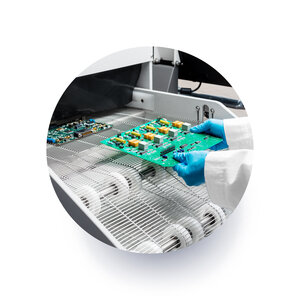
Cleaning chemicals dissolve, solubilize, or disperse residues so they can be removed without damaging components or board materials. They influence surface energy and wetting, which affects solderability and coating uniformity. Selection affects throughput, worker safety, and capital equipment. For example, low-residue fluxes may require mild solvents or water-based cleaners, while heavy rosin flux demands specialized flux removers. ZESTRON provides formulation guidance and analytical services to quantify cleanliness and optimize chemistry.
Common contaminants on PCBs
Contaminants vary by process step and include:
-
Flux residues: rosin, organic acids, and activated salts that are hygroscopic and conductive.
-
Particulates: solder splashes, dust, and machine oils that cause shorts or mechanical issues.
-
Ionic residues: chloride, bromide, and sulfate ions from cleaning agents or process chemicals that drive corrosion.
-
Conformal coating contaminants: uncured monomers and catalyst residues that affect reliability.
Types of PCB cleaning chemicals
Cleaners fall into broad families: solvents, water-based systems, semi-aqueous or alkaline chemistries, and emulsion solvents. Each family is chosen for its solvency power, flash point, residue profile, and environmental footprint. Manufacturers such as ZESTRON offer product lines across these families tailored to flux type, component sensitivity, and throughput. A risk-based approach evaluates effectiveness, compatibility, safety, cost, and disposal to choose the right chemistry.
Solvents
Solvents provide strong solvency and rapid drying for many flux types and process soils. They include polar protic solvents, polar aprotic solvents, and hydrocarbon blends. Advantages include low drying times and excellent residue removal, while limitations include flammability, worker exposure, and regulatory restrictions.
ZESTRON supplies both conventional solvent systems and higher-performance blends with controlled evaporation rates to match cleaning equipment and operator safety programs.
Water-based cleaners
Water-based cleaners use deionized water with surfactants, detergents, and saponifiers to remove ionic and particulate contamination. They are preferred for rosin fluxes and assemblies with water-soluble residues. Advantages include low flammability and ease of waste treatment, while disadvantages include drying time and potential for corrosion without proper inhibitors.
ZESTRON supplies additives and process control protocols to ensure effective rinsing and minimal residual conductivity.
Semi-aqueous & Alkaline
Semi-aqueous cleaners mix solvent action with water rinsing to remove tough fluxes and polymeric residues. Alkaline cleaners use caustic chemistry to saponify oils and break down organic films. They are effective for heavy contamination but require material compatibility checks for polymers and plated surfaces. Waste neutralization and proper treatment are essential.
We provide process audits and neutralization recipes to reduce environmental impact and meet discharge regulations.
 Choosing the right cleaning chemical
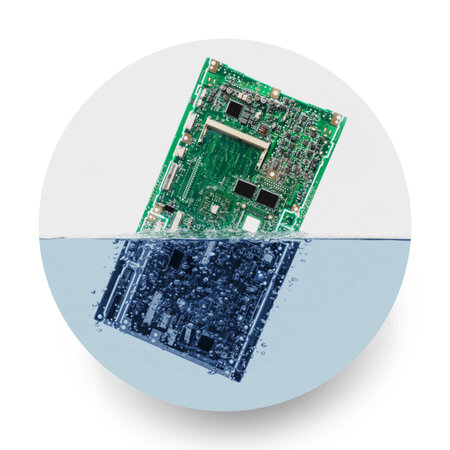
Choosing the right chemical involves evaluating contamination type, substrate compatibility, process constraints, safety, and total cost of ownership. Consider board population density, conformal coatings, connector types, and solder mask materials. Throughput needs dictate whether solvents or aqueous systems better fit equipment cycle times. ZESTRON provides decision matrices and pilot testing to quantify performance, throughput, and waste handling costs prior to full production implementation.
Factors to consider
Key factors include solvency parameter (Hildebrand or Hansen), surface tension, flash point, toxicity, residue level, and disposal requirements. Compatibility tests should include coupon dunk tests, solderability assays, and coated component checks. Consider occupational exposure limits, ventilation, and fire suppression needs. ZESTRON emphasizes data-driven selection using analytical tools like ion chromatography and surface resistivity to set acceptance criteria and cleanup targets.
Testing and compatibility
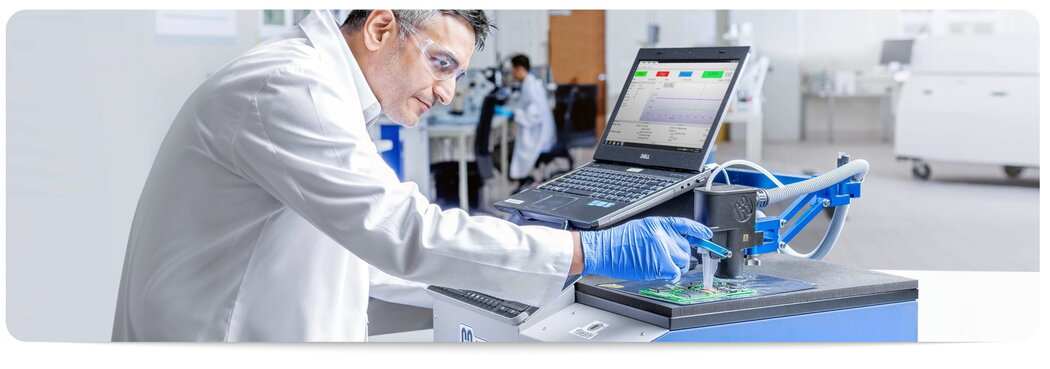
Before production roll-out, perform compatibility testing on representative assemblies. Tests should include materials compatibility, solderability after cleaning, ionic contamination measurements, and visual inspections under magnification. Use analytical methods such as ion chromatography, total organic carbon, and surface insulation resistance. ZESTRON's labs offer certified testing protocols and failure analysis to ensure selected chemistry removes contaminants without harming delicate components or coatings.
Application methods for PCB cleaning
Application methods impact effectiveness, throughput, and regulatory compliance. Common methods include manual brushing, spray-in-air, ultrasonic immersion, vapor degreasing, and automated spray-in-air washers. Each method has process limits tied to solvent choice, part geometry, and residues. ZESTRON helps match chemical formulation to application hardware and provides recipes for cycle times, rinse steps, and drying to achieve reproducible cleanliness.
 Manual cleaning techniques
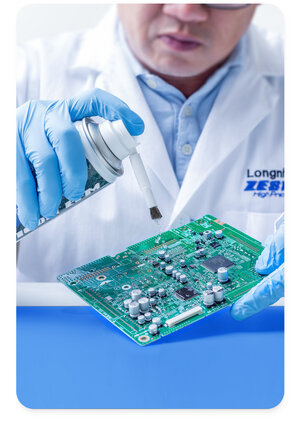
Manual cleaning is flexible for prototypes and rework, using swabs, brushes, and dispensers. Techniques include solvent wiping, localized ultrasonic pens, and controlled swab-and-rinse sequences. Operators need SOPs, personal protective equipment, and accurate dispensing to avoid over-wetting or insufficient removal. ZESTRON offers training and standardized procedures to reduce variability and document acceptable cleanliness for field return reduction.
Automated cleaning systems
Automated washers bring consistency and throughput with features such as multi-stage solvent baths, spray nozzles, ultrasonic energy, and heated drying. They control contact time, temperature, and agitation to meet cleaning targets. For solvent systems, vapor degreasers deliver closed-loop recovery to limit emissions. ZESTRON performs process audits, configures machine cycles, and validates cleaning with quantitative analytics to ensure repeatable results at scale.

