The Ultimate Guide to Electronics Cleaning Chemistry
PCB defluxing is a critical step in electronics manufacturing and repair, affecting reliability, yield, and long term performance. More than 3,000 cleaning processes have been installed globally by experts such as ZESTRON, which serves over 2,500 customers with precision cleaning solutions. This guide explains what defluxing is, the chemistry of flux residues, practical cleaning methods, and environmental drivers shaping chemistry choices in 2026.
Key takeaways
-
Defluxing removes flux residues left by soldering and prevents corrosion, ionic contamination, and failures.
-
Effective cleaning relies on selecting chemistry matched to flux type, substrate, and process; aqueous, solvent or vapor systems are common.
-
We offer analytical services and formulated chemistries to optimize yield and reliability in PCB and power electronics cleaning.
-
Inline monitoring and analytics cut process variation and provide documented cleanliness.

Understanding PCB defluxing
What is PCB defluxing?
Defluxing is the process of removing flux and solder byproducts from assembled printed circuit boards. It eliminates rosin, ionic residues, and flux activators that remain after wave or reflow soldering. Typical steps include precleaning, solvent or aqueous wash, rinsing, and controlled drying. Flux types evolved with solder alloy changes, from tin lead to lead free SAC alloys, which increased flux activity and residue complexity.
Importance of PCB defluxing
Residual flux can cause dendritic growth, leakage currents, and intermittent failures, especially under humidity and thermal stress. Cleaning increases first pass yield and reduces warranty returns, saving manufacturers significant costs. Industry tests such as SIR and Ionic Extraction set acceptance limits; meeting these reduces field risk. High reliability sectors such as aerospace, medical and automotive demand documented cleaning and validation to pass long term qualification tests.

your product requirementsChemistry of flux and its residues
Composition of flux materials
Flux formulas differ widely. Rosin based flux contains abietic acids and tackifiers, while water soluble fluxes add organic acids and surfactants to promote solderability. No clean fluxes minimize visible residues but still contain activators and ionic species that can compromise long term reliability. No clean fluxes contain low residue polymers; water soluble fluxes require complete removal to avoid corrosion. Activators often include organic acids and halides, which are particularly hygroscopic and conductive when left on a surface.
What is flux chemistry?
Liquid fluxes are used for soldering through-hole components on the PCBs. Fluxes are also present in solder paste which is used for mounting SMT components on the PCBs.
What are activators?
Activators are present in flux and mainly used for activating (dissolving metal oxides) the copper pads on the board surface.
What are rosin and what role do they play in cleaning?
Rosin is natural-resin used flux which helps in removing metal oxides from copper pads.
How does Organic contamination occur?
Organic contamination is carbon-based chemical compound. They can originate during bare board manufacturing or PCB assembly process.
Effects of flux residues on electronics
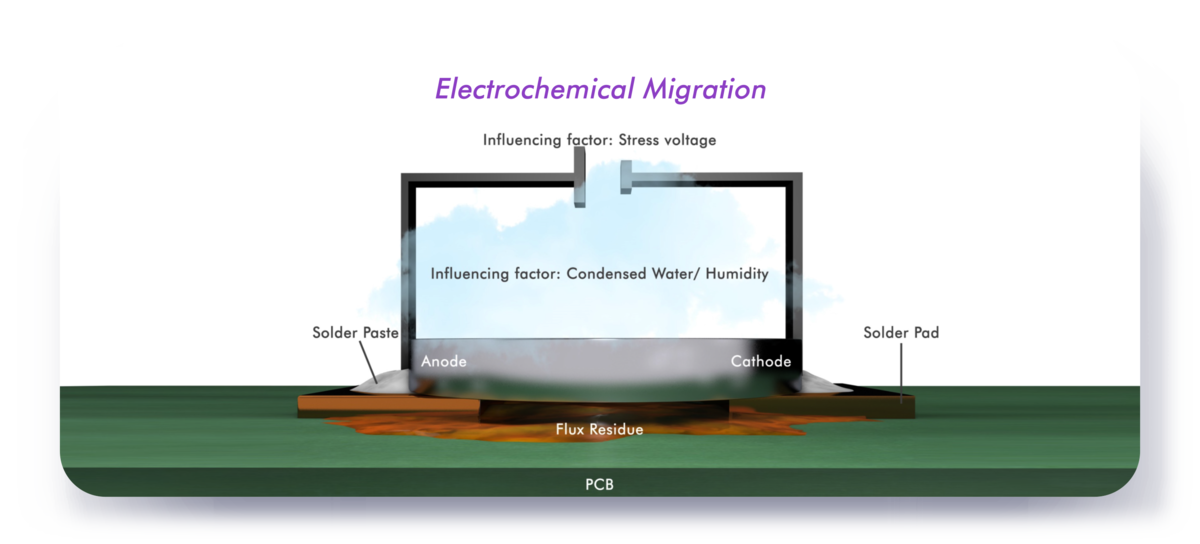
Leftover flux increases surface conductivity, attracting moisture and accelerating corrosion on copper and nickel finishes. Ionic residues cause current leakage paths; this leads to elevated field failures and reduced mean time between failures. Manufacturers like ZESTRON report measurable yield improvements after optimized defluxing, often reducing rework rates by double digits. Even small ionic loadings in the microgram per square centimeter range can lower SIR and promote leakage under bias. Dendritic growth can form conductive filaments bridging pins under high humidity and bias, causing shorts and unpredictable behavior.
What are Ionic residues, and how do they affect reliability?
Ionic residues are conductive. They can carry electrical charge. Due to this presence of ionic residues can cause electrochemical migration and impact reliability.
Best practices for PCB defluxing
Selecting the right cleaning method
Choose a cleaning method based on flux chemistry, assembly density, component sensitivity and production volume. Aqueous systems excel on water soluble and many no clean residues if combined with surfactants and proper rinsing. Solvent systems, including IPA and specialty fluorinated solvents, provide fast drying and low residue but require flammability controls and waste handling. ZESTRON technical centers run application testing to match chemistry and process for consistent removal and minimal damage. A simple decision matrix helps match method to needs. Consider total cost of ownership - capital, chemicals, waste and labor. Training and maintenance are essential to sustain results.
Aqueous vs Solvent Cleaning
Solvent based cleaners cannot be used in spray-in-air machines and there are other requirements like explosion proof (double layer) wash chamber, pneumatic based etc. This also depends on type & flash point of solvent. When choosing between aqueous and solvent, solvent based cleaners cannot be used in spray-in-air machines and there are other requirements like explosion proof (double layer) wash chamber, pneumatic based etc. This also depends on type & flash point of solvent. Aqueous based chemistries can be used in any kind of machine i.e. spray-in-air, spray-under-immersion, ultrasonic, soaking etc.
How does the Environmental impact change when using aqueous vs solvents?
Solvent based cleaners have higher VOC and stringent EHS requirements. Due to greener initiatives and environmental reasons, majority of the customers are using or switching to aqueous based cleaners.
What are there Cost considerations between the aqueous and solvent cleaners?
Solvent based cleaners are more costly to use because of special requirements for handling & disposal. Also, solvents are used at 100% concentration and have limited flux loading capacity. Aqueous based cleaners are used at 5% - 15% concentration depending on flux type and certain class of chemicals provides high flux loading capacity which helps in extending bath life. Due to this operational cost of aqueous based cleaners are lower compared to solvent based cleaners.
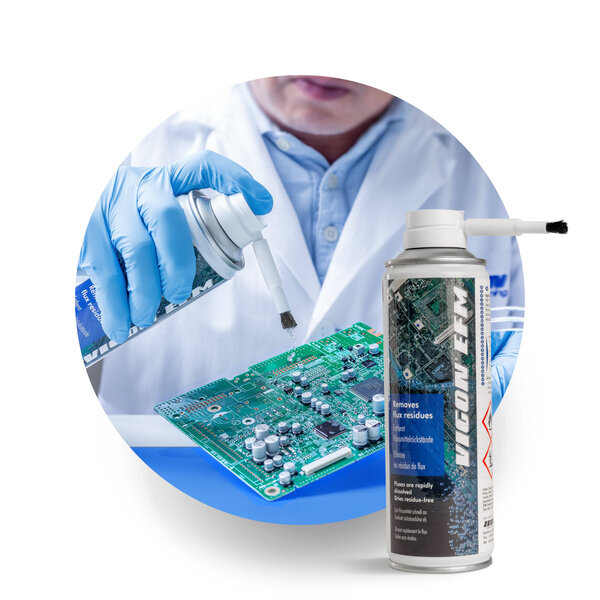
Wipe Down
A manual cleaning method where a surface is cleaned using a wipe, cloth, or swab with a cleaning solution. Typically used for spot cleaning or low-volume applications.
- Low Cost
- Targeted
- Typical throughput: Low
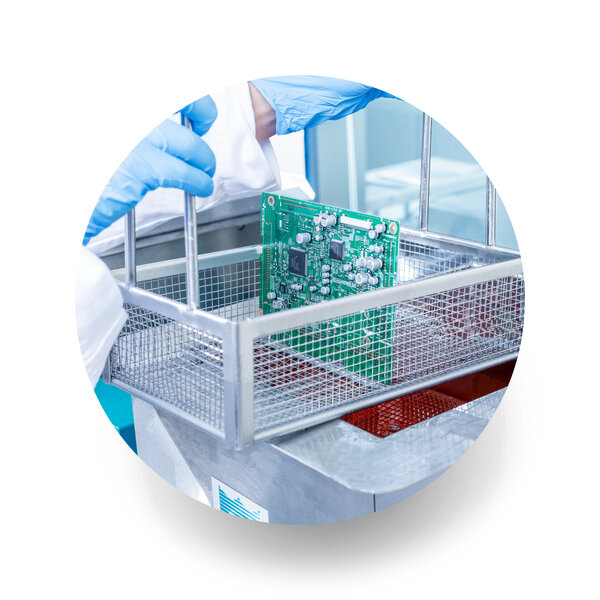
Immersion
Parts are fully submerged in a cleaning solution, allowing contaminants to dissolve or lift off over time. Often paired with agitation or ultrasonics for better results.
- Consistent
- Scalable
- Typical throughput: Medium
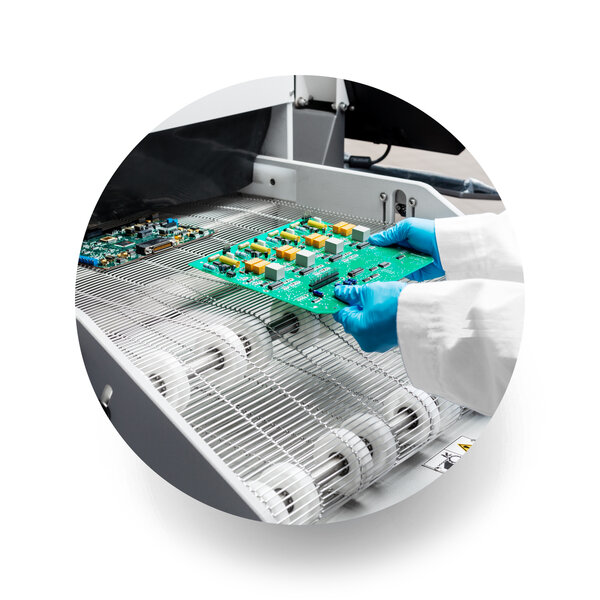
Vapor Degrease
Uses heated solvent vapors that condense on cooler parts, dissolving and rinsing away contaminants in a closed system. Common in precision industries like electronics and aerospace.
- Fast
- Low Residue
- Typical throughput: High
Wipe-down or manual cleaning uses lint-free swabs, brushes and electronics grade solvents to remove localized residues. Isopropyl alcohol is common, but high purity electronic grade IPA prevents introducing contaminants. For sensitive areas use VIGON EFM style flux removers or dedicated products and follow ESD and ventilation precautions. Best practice includes using ESD safe wipes, working from clean to dirty, and changing swabs frequently. Always power down boards and wear gloves and eye protection. Use filtered solvents, avoid compressed air blowing residues into connectors, document swab logs.
Liquid immersion uses tanks with agitation, ultrasonic, spray or spray-in-air modules to dislodge residues from complex assemblies. Aqueous cleaners often include surfactants and alkaline builders to emulsify rosin and oils. Controlled temperature, dwell time and staged rinses are essential to avoid entrapment of cleaning fluid. ZESTRON supplies formulated concentrates and monitoring tools to control concentration and cleanliness targets. Maintain bath concentration with titration or refractometry, and replace or filter based on soil load. Typical aqueous temperatures range from 30 to 60 degrees Celsius depending on flux hardness. Final rinses with deionized water or a solvent rinse reduce ionics; cascade or counterflow rinsing minimizes water consumption.
Vapor degreasing relies on solvent vapors condensing on cool PCBs to dissolve flux residues, then draining back to the solvent sump. It delivers high cleanliness and low residual ionic contamination with short cycle times. Operators must account for solvent selection, worker safety and VOC regulations, and ZESTRON offers guidance on compliant formulations. Choose solvents with low global warming potential and provide appropriate capture and filtration for worker safety. Common vapor solvents include HFE and hydrofluoroethers, chosen for low residue and thermal stability.
Cleaning chemistry and formulations
Chemical components for effective cleaning
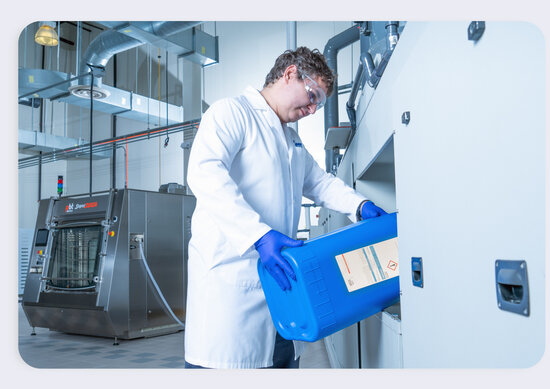 Effective cleaners combine surfactants, solvents, builders and corrosion inhibitors to dissolve and lift residues. Surfactants reduce surface tension and allow residues to disperse; nonionic types perform well with rosin, while anionic surfactants target ionic soils. Solvents like high purity IPA help cut oils and speed drying, but they may be less effective on rosin without surfactants.
Chelators and pH buffers manage metal interaction, while inhibitors protect exposed copper and solder finishes during cleaning. Typical surfactant concentrations are 0.1 to 2 percent w/w; builders may range 1 to 5 percent. Corrosion inhibitors are critical for copper rich boards and often use benzotriazole derivatives. Lead free solder fluxes are more carbonaceous when heated; specialized saponifiers or alkaline boosters help break them apart.
Innovations in cleaning chemistry
Innovations include low VOC solvent blends, hydrofluoroether alternatives, and enhanced surfactant packages that reduce rinse needs. Emerging approaches, such as plasma pretreatment and microbubble assisted aqueous cleaning, improve removal from tight component interfaces. ZESTRON invests in formulation R&D and pilot testing at global technical centers to validate new chemistries against OEM reliability standards. Microbubble and nanobubble technologies improve contact between cleaning media and microfeatures, reducing required chemical load; companies such as Moleaer have published data on efficacy in wastewater and process cleaning. Inline conductivity and TOC sensors enable tight process control and reduce bath dumps.
How Do Cleaning Agents Interact with Flux Types?
No-clean
-
What is the no-clean contamination problem? After reflow process, inert resin layer entraps flux activators. As long as this inert resin layer is intact flux activators will not come in contact with atmosphere. If resin layer ruptures, flux activators will come in contact with atmosphere and cause leakage current, electrochemical migration, dendritic growth and eventually board failure.
-
What is the chemistry interaction? Cleaning agent dissolves the resin layer and removes the flux activators present underneath it.
-
What is ZESTRON's recommend solution? Aqueous spray-in-air wash process is most effective for removing no-clean flux residues.
Water-soluble
-
What is the water-soluble contamination problem? Water-soluble fluxes are very aggressive. If left on boards for extended time, they can start corroding the solder joint. Typically, its recommended to wash water-soluble fluxes within 4 – 8 hours after soldering step.
-
What is the chemistry interaction? Water-soluble fluxes are designed to be washed with water. Water does a good job in removing water-soluble fluxes from board surface and high clearance areas. For low stand-off components when stand-off falls below 2 mil, water will have hard time accessing this area in short duration due to high surface tension (72 dynes/cm). Cleaning agent even at 5% concentration drops surface tension below 30 dynes/cm and helps in accessing low stand-off areas much faster.
-
Recommend solution approach. For densely packed PCBs having low stand-off components like micro-BGAs, QFNs & LGAs, use cleaning agent at 5% concentration and wash the boards in spray-in-air machine.
Lead-free Flux
-
What is the lead-free flux contamination problem? Lead-free solder pastes are soldered at higher temperatures. Due to this flux becomes more baked on compared to leaded solder pastes. This makes cleaning process more challenging.
-
What is a chemistry interaction? Cleaning mechanism will be same as explained above for no-clean & water-soluble fluxes.
-
What is ZESTRON's recommend solution approach? Aqueous spray-in-air wash process is most effective for removing lead-free flux residues.
High-temperature Flux
-
What is the high-temp contamination problem? High-temperature processes can create stubborn, baked-on flux residues that are difficult to remove.
-
What is the chemistry interaction? Heat can alter or polymerize flux residues, making them more strongly bonded to component and board surfaces.
-
What is ZESTRON's recommend solution approach? Use a cleaning chemistry specifically formulated to dissolve and remove high-temperature flux residues effectively.
low VOC and water based optionsEnvironmental considerations
Regulatory pressures on VOCs
Regulators continue to tighten VOC and hazardous solvent restrictions, driving manufacturers away from ozone depleting or high toxicity solvents. Rules such as REACH and EPA listings have phased out legacy solvents in many regions, increasing demand for compliant alternatives. ZESTRON provides low VOC and water based options plus compliance support to help plants meet 2026 regulatory requirements. State level rules in California and several other US states impose stricter VOC caps, increasing costs for airborne emissions permits and solvent disposal.

Shift towards eco friendly solutions
Manufacturers favor water based chemistries with biodegradable surfactants and closed loop rinse systems to reduce waste and emissions. Advances in surfactant science improve soil lift while lowering required concentration, cutting wastewater loads. ZESTRON supports process changes via training, analytical validation and recycling partnerships to shrink environmental footprint. Wastewater treatment and surfactant biodegradability are key design points; selecting readily biodegradable surfactants simplifies plant effluent handling.
Have A pH Neutral Cleaning Question?
Material Compatibility
ZESTRON's new generation of cleaning agents have excellent corrosion inhibition package which makes them compatible with Aluminum & other sensitive metals, alloys and coatings. Also, ZESTRON offers pH neutral cleaning agents which are also compatible with sensitive metals (Aluminum, Copper, Gold etc.), alloys (Brass etc.) and coatings (Anodized, Alodine, Olive-drab, Electro-less Nickel Plating, chromate coating etc.). Additionally ZESTRON chemistry is compatible with Copper, and conformal coating. Depending on type of conformal coatings (i.e. acrylic, polyurethane, silicone based) they may get slightly impacted during wash process. Typically, it’s not recommended to wash PCBs having conformal coating with regular PCBs. ZESTRON cleaning agents are also compatible with underfill material (after they are cured). But there are several types of underfill materials, so it will be beneficial to verify compatibility. Generally, pH neutral cleaning agents have minimum impact on sensitive components. If needed ZESTRON can recommend mitigation options for sensitive components based on our experience.
Case studies and industry examples
Can one effectively clean under low stand off components (<4 MIL or 0.004 inches)? | Whitepaper
With the ban of CFC’s, various cleaning processes have emerged and have been established as viable alternatives. Several cleaning processes such as ultrasonic and spray in air batch and in-line have become firmly established. Each equipment type typically has its advantages and disadvantages, which will obviously be of different significance to the end-user...
Download The "Can one Effectively Clean Under Low Stand Off Components?" Paper
PCB Surface Finishes & the Cleaning Process | A compatibility Study
All PCBs that are manufactured require a surface finish to protect exposed copper on the surface which if left unprotected, can oxidize, rendering the board unusable. To address this issue, it's common to surface treat the PCB prior to assembly and reflow. The surface finish not only prevents oxidation of the underlying copper, but guarantees a solderable surface...
Download the "PCB Surface Finishes & the Cleaning Process" Compatibility Study
Conclusion: The future of PCB defluxing
PCB defluxing will continue shifting to lower emission chemistries, smarter process controls and inline analytics that verify cleanliness in real time. Microbubble and surfactant advances, paired with machine learning process control, will reduce water use and waste. ZESTRON will support this transition with validated chemistries, training and global technical centers to shorten ramp up and ensure reliability. Contact ZESTRON for a process audit and analytical baseline to prioritize cleaning investments. Start with a cleanliness audit.
FAQ
No clean flux often requires low foaming, high solvency aqueous cleaners with surfactants or solvent blends. IPA works for light residues but may need boosters; testing in ZESTRON labs determines cleaning window.
Isopropyl alcohol can be effective for light defluxing and spot cleaning, especially when using electronic grade IPA to avoid impurities. For heavy rosin residues or high volume production, IPA alone is often insufficient and requires additional surfactants or aqueous systems.
Validate cleanliness using ionic contamination tests, surface insulation resistance measurements, and visual inspection under magnification. Combining extraction methods and ion chromatography provides quantitative residual ionic levels, while TOC and conductivity monitoring help control process baths. ZESTRON offers analytical services to perform these tests and set acceptance criteria.
Using the wrong chemistry, inadequate rinsing, and uncontrolled bath concentration are frequent errors. Over-aggressive mechanical scrubbing or unsuitable solvents can damage components, and failing to address waste handling and VOC compliance creates regulatory risk. Use documented procedures and regular process audits.
Implementation takes weeks to months depending on testing needs, pilot runs and regulatory reviews. ZESTRON typically provides lab evaluation, on site trials and training to compress ramp up and prove process performance.